Location
Lee’s Summit, MO
Addiction treatment in Lee's Summit
Taking that first step to overcome addiction can feel overwhelming. People struggling with a substance use disorder (SUD) may worry about the cost, their work, or their family. Others simply don’t know where to begin.
This issue of accessible care becomes clearer when you look at the statistics.
The disparity between people who need addiction treatment and those who receive it is staggering. According to surveys, over 54 million Americans aged 12 and older suffer from some kind of addiction and require professional support.

Only 23% of these individuals get the help they need, leaving millions of lives at risk of the severe consequences of drug and alcohol addiction.
Substance use disorder is treatable with the right level of care. For individuals and families looking for substance use treatment in Lee’s Summit, Missouri, understanding your options is a good first step.
Addiction is a chronic condition that primarily affects the brain. It hijacks your central nervous system’s (CNS) reward system, changing how you think, feel, and behave.
Alcohol, opioids, methamphetamine, marijuana, and prescription medications are some examples of drugs commonly abused in the US.
You don’t have to wait for a crisis to seek treatment or rehab. Consider talking to a healthcare professional if your substance use has started to affect aspects of your life and is becoming difficult to control.
Loss of control over substance use is a major characteristic of addiction. Over time, the person can develop heightened tolerance to the drug, increasing the risk of overdose.
Experiencing uncomfortable withdrawal symptoms and cravings when cutting back or reducing intake also means the body has already adapted to the presence of the substance. This is called physical dependence.
Depending on the severity of SUD and its symptoms, someone may require medical detox and case management for safe withdrawal.
Midtown offers different levels of outpatient programs, services, and evidence-based therapies for people struggling with alcohol and opioid addiction near Lee’s Summit and Kansas City, Missouri.
Levels of Care: What We Offer
Substance abuse treatment shouldn’t be one-size-fits-all. Treatment programs must be tailored to the person’s condition and circumstances.
As a guideline for healthcare providers, the American Society of Addiction Medicine (ASAM) outlines a continuum of care ranging from inpatient rehab to outpatient services and aftercare support.
Midtown offers outpatient treatment programs for people who need them.
Partial Hospitalization Program (PHP)
Clients in a partial hospitalization program, also called day treatment, receive therapy for several hours a day, typically five or six days a week.
Partial hospitalization doesn’t require you to stay overnight or live in a facility. It offers structured support, including counseling, talk therapy, medication, and peer-support groups.
Those who have completed detoxification, are stable, and have a supportive home environment may be a good fit for PHP. It may also serve as a step-down after inpatient treatment or full-time rehab.
Midtown’s partial hospitalization lasts for 4 to 6 weeks, Monday to Saturday from 9:00 AM to 2:45 PM.
Intensive Outpatient Program (IOP)
Individuals who need structured support but not 24/7 supervision may benefit from an IOP. It can serve as a step-down following PHP, when the patient can safely manage daily life outside rehab.
IOP treatment is intensive and highly structured, often focusing on relapse prevention and skill building.
Because people recovering from SUD often have other commitments, Midtown offers flexible IOP schedules or tracks to accommodate their needs.
The facility’s day track runs from 9:00 AM to 12:00 PM. The evening track is from 5:30 PM to 8:30 PM, making it a good option for working professionals and students.
IOP can last anywhere from 30 to 90 days.
Standard Outpatient Care
Standard outpatient care is when participants attend scheduled counseling and therapy while continuing to live at home. It’s less intensive than IOP and PHP.
Treatment in this arrangement usually involves a few hours of sessions scattered throughout the week.
If you can attend appointments consistently and can manage your symptoms, you may consider standard outpatient care. Interventions may combine group therapy, counseling, and medication.
Treatment duration can vary, but it can be a part of a longer plan to support long-term recovery after intensive rehab.
Medication-Assisted Treatment (MAT)
Severe cases of addiction or those suffering from a dual diagnosis often require medication management.
A dual diagnosis is when someone has both a mental health disorder and SUD. According to studies, roughly 50% of those diagnosed with addiction also struggle with one serious mental illness.
Some common co-occurring disorders with SUD are depression, anxiety, post-traumatic stress disorder (PTSD), attention-deficit/hyperactivity disorder (ADHD), and bipolar disorder.
Because comorbid diseases can make each other worse, treating both the mental illness and SUD simultaneously is important.
MAT combines mental health treatment with FDA-approved medications, such as Suboxone, Sublocade, and Vivitrol.
What Happens When You Enter Rehab?
When you call a treatment center, an admissions team will walk you through the admissions process. They’ll help you verify your insurance coverage and payment options.
An assessment is the usual first step before you enter rehab.
Clinicians may ask about your substance use, overall health, living conditions, and previous treatment history. Be honest during this stage, as healthcare providers use the information to tailor a suitable program.
Treatment may begin once the facility has identified the right level of care and interventions for your circumstances.
Same-day admissions may be available at Midtown once your insurance is verified and your assessment is complete. This option can help people in crisis who need immediate clinical support.
The call
Starting addiction treatment begins with one call. Admissions is available 24/7, so you can call at any hour, for yourself or for someone you love in Lee’s Summit.
You don’t need to have it all figured out. A member of our team listens first, then asks about your situation, the substances involved, any mental health concerns, and your insurance. Everything you say is confidential and protected by federal privacy law for substance use treatment. Those answers help us point you toward the right level of care.
Most first calls are short. If you want to talk longer, you can, and if you just want to ask a question and think it over, that’s fine too.
Verification and same-day admission
Next, we verify your insurance. We work with all major commercial insurance companies. Benefits vary by plan, so we check what yours covers for each level of care and tell you where you stand before you commit to anything. You can also use the Verify Insurance button on this page.
Midtown does not accept Medicaid or Medicare. Payment plans are available, and we provide private-pay rates on request.
Same-day admission may be available once we verify your insurance and complete your assessment, so the sooner you call, the sooner both can start. When your first day is set, your admissions coordinator tells you exactly what to bring and where to go.
Intake: day one
Your first day starts with an assessment. Our team uses it to understand your substance use, your health history, and any mental health conditions, then matches you to the right level of care, such as PHP or IOP. If you’re living with depression, anxiety, or another condition alongside substance use, say so; it shapes your plan.
Midtown is an outpatient program, so you don’t stay overnight. You come to our building at 1000 W 46th Street in Kansas City, Missouri, attend your sessions, and go home to Lee’s Summit at the end of the day. Your first day also covers the practical side: your schedule, what to expect in group, and who to contact with questions.
A Supportive Environment For Recovery
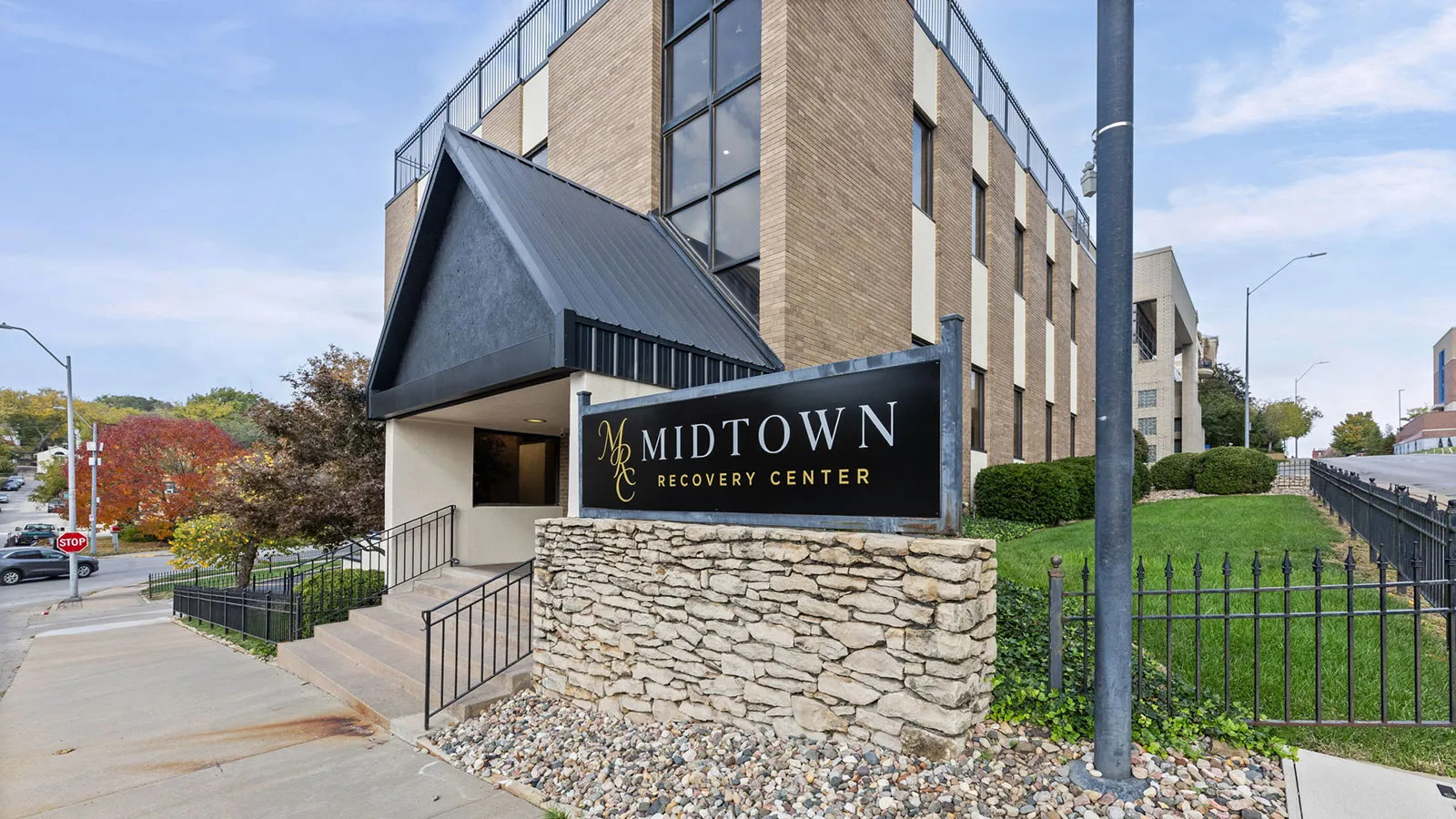
Located at 1000 W 46th Street, Kansas City, Missouri, Midtown provides a supportive environment for people struggling with addiction.
The facility features three group rooms, private offices, and a client lounge. Clients receive treatment in a comfortable setting where they can focus on recovery, supported by a caring staff.
Daily life and amenities
Because every program at Midtown is outpatient, daily life stays yours. You come in for your scheduled block, whether that’s a full PHP day, a three-hour IOP session, or an outpatient appointment, and the rest of the day is for work, family, and practicing what you learned.
While you’re here, the day moves between group rooms and private offices. The client lounge is yours between sessions for a coffee, a quiet moment, or a conversation with someone who understands. You don’t need to bring much; your admissions coordinator goes over the short list before your first day.
Privacy and discretion
Privacy matters when you’re seeking substance use treatment, and the law is on your side. Federal confidentiality rules for addiction treatment (42 CFR Part 2) and HIPAA protect your records and go further than ordinary medical privacy.
In practice, that means staff will not confirm to a caller that you are a client, or share anything about your care, unless you have signed a release naming that person. You decide who is in the loop, and you can change that at any time. Your employer only learns what you choose to tell them.
Getting here

Midtown is in Midtown Kansas City near Westport and the Country Club Plaza, roughly 25 to 35 minutes from Lee’s Summit depending on traffic. Use the map on this page to see exactly where we are, and if you’d like help finding us, call admissions any time.
Directions and map
From Lee’s Summit, most people take I-470 or MO-350 west toward Kansas City, then US-71 (Bruce R. Watkins Drive) north and exit toward the Plaza and Westport area. The building is a two-story standalone at 1000 W 46th Street in Kansas City, Missouri, a few blocks west of Main Street. Enter the address into your maps app for turn-by-turn directions, and ask admissions about arrival details when you schedule your first day.
Coming from out of area
Many of our clients come from across the Kansas City metro, including Lee’s Summit, and some come from further away. Because Midtown is outpatient, you need somewhere to stay during treatment. If you don’t have a safe, substance-free place nearby, tell admissions. We have relationships with local sober living homes and can help you think through options before you start.
If you’re coming from out of state, your commercial insurance usually travels with you, though plan rules vary. We verify that with your insurer before you commit.
What Therapies Are Available?

Evidence-based therapies are essential in treating substance use disorder. These therapeutic approaches may be useful in resolving underlying issues that reinforce substance abuse.
- Cognitive Behavioral Therapy (CBT): CBT is a widely used therapy for treating substance use and mental health disorders, with studies backing up its effectiveness. Its goals include identifying and resolving maladaptive behaviors and teaching coping strategies.
- Eye Movement Desensitization and Reprocessing (EMDR): EMDR was originally developed to treat PTSD. But it can also be used to resolve SUD triggered by an underlying trauma.
- Dialectical Behavior Therapy (DBT): DBT is a modified CBT. Recovering from substance use involves a lot of emotional turmoil, so the therapist teaches patients how to manage intense emotions and tolerate distress.
How Can I Convince Someone to Get Help?
Convincing someone with an SUD to enter rehab could be the nudge they need to consider treatment.
Approach the subject with compassion and with a careful plan. Before talking to a loved one, educate yourself about addiction and available treatment options. Talking to a healthcare provider would help.
Words matter more than many people realize. It may be worth familiarizing yourself with non-stigmatizing language that avoids moral judgment and places the person before the disease.
If you’re unsure how to start the conversation, consider staging an intervention with a professional.
Getting a loved one here
Talking about substance use and treatment is hard, and when someone you love is struggling, you may feel helpless. These tips can show you where to start:
- Pick a calm, private moment when your loved one is sober.
- Lead with concern and share specific examples of what you’ve seen, without labels or blame.
- Offer to help with the call to admissions, and to drive them to their first day.
You can call together or call first on your own. We can walk you through the steps, including insurance verification, and if they refuse right now, keep the door open. Many people say yes on the second or third conversation.
Visiting, calls, and contact
Because Midtown is outpatient, there are no visiting hours to plan around. Your loved one comes home every day, and family involvement happens through family sessions rather than visits.
If you’d like updates on how treatment is going, your loved one can sign a release naming you. Without it, staff can’t confirm anything, including whether someone is a client. Phone use during program hours is covered at intake, and admissions can answer questions about contact any time.
Family programming
Family sessions are part of the program and can be held up to once a week. They’re led by your loved one’s clinical team and give the family a structured place to talk openly, understand how addiction and recovery work, and rebuild trust. Some time is spent together and some with family members on their own, so you can ask your questions freely.
After treatment, Midtown’s family group, part of our aftercare, offers continued support from other families who understand. Want to know how your family can take part? Call admissions, and we’ll explain how it works.
Is There Continuing Support After Rehab?

Finishing a program doesn’t necessarily mean you’re already out of the woods. Healthcare providers understand this and may offer a range of aftercare services to support long-term sobriety.
Counseling, support groups, and alumni programs are examples of this continuing treatment.
Midtown offers aftercare for clients who completed outpatient programs, including family groups, alumni groups, and relationships with local sober living homes.
Missouri Addiction Statistics
According to the Substance Abuse and Mental Health Services Administration (SAMHSA), about 8% to 10% of Missouri’s adult population meet the criteria for some kind of addiction in any given year.
The Missouri Department of Mental Health paints a similar picture, estimating an 8.5% prevalence of SUD in 2024.
For individuals and families dealing with alcohol and drug abuse in the Show Me State, it’s important to know that SUD is treatable and that help is available.
FAQs
How long does rehab take?+−
Everyone experiences addiction differently. Rehab length can vary based on the level of care someone needs. Structured programs typically last 30 to 90 days, but full recovery can take longer.
Is addiction treatment confidential?+−
Yes, addiction treatment is confidential. Patient information and treatment history are protected by federal law.
Can family visit during treatment?+−
Midtown is an outpatient program, so there are no visiting hours; your loved one comes home each day. Family involvement happens through family sessions, which are part of the program and can be held up to once a week.
How do I help someone recovering from addiction?+−
Family involvement during rehab can make a world of difference. You can support someone through recovery by avoiding enabling behaviors and encouraging healthier habits.
Do rehab centers accept insurance?+−
Midtown works with all major commercial insurance companies and verifies your benefits before you begin. We do not accept Medicaid or Medicare. Payment plans are available, and private-pay rates are provided on request.
What happens if I relapse?+−
Relapsing after rehab is considered a normal part of recovery and doesn’t mean treatment has failed. Talk to your healthcare provider to understand why it happened and know if you need further intervention.
We Accept Most Major Insurance Plans
Don't let cost be a barrier to recovery. Most treatment is covered by insurance.
Our Team
Medical Director
MD
Clinical Director
LCSW
Admissions Coordinator
Accredited & Licensed
Visit Us in Kansas City
Serving Lee's Summit, MO from our Kansas City facility.
1000 West 46th Street
Kansas City, MO 64112