
Treatment Program
Medication-Assisted Treatment (MAT)
Written by: Midtown Recovery Center Editorial TeamPublished: October 23, 2026Updated: October 27, 2026
What MAT Is All About
Experts agree that opioid addiction isn’t the result of a moral failing. Instead, it’s a medical condition, and a treatable one at that.
Like many other chronic medical conditions, addiction can be treated with medications along with other therapeutic interventions. Recovery programs built around this idea are called medication-assisted treatment (MAT) programs.
Read on to learn more about MAT, what it’s like, how long it lasts, and the role of family in the program.
MAT is the use of FDA-approved medications to heal the brain from substance use disorders. The program’s overarching goals are harm reduction, craving management, and withdrawal symptom minimization.

Is MAT the Right Level of Care for You?
MAT is not a level of care on its own. At Midtown, it runs alongside PHP, IOP, or outpatient treatment, so the question is really two questions: is medication right for you, and which program should it sit inside? Your assessment answers both.
Who Is This Program for
Medication-assisted treatment may be a good fit for you if:
- You meet the diagnostic criteria for an alcohol use disorder (AUD) or an opioid use disorder (OUD).
- You’ve addressed the physical dependence component of your addiction.
- You have a history of relapse with abstinence-only programs.
- Your care team conducted a thorough assessment and determined that the MAT program is the best course of action for your needs.
Who Needs More Support First
Some people need medical detox before starting MAT. Vivitrol, for example, requires you to be opioid-free before the first dose, and alcohol withdrawal can be dangerous without medical monitoring.
Midtown does not provide detox or residential treatment. If you need either, our admissions team can refer you to a provider that offers it, and you can begin MAT with us as part of outpatient care once that stage is complete.
MAT vs. Other Approaches
MAT is one approach to treating alcohol and opioid use disorders. The main alternative is abstinence-based treatment that relies on therapy and peer support without medication. Both are legitimate, and the right choice depends on your history, your substance, and what has or has not worked before.
MAT tends to be recommended when cravings or withdrawal have made it hard to stay in treatment, when past attempts without medication ended in relapse, or when the risk of overdose after a slip is high. It is always combined with counseling; medication alone is not a treatment plan.
Whichever route you take, it runs inside one of Midtown’s outpatient programs:
- Partial Hospitalization Program (PHP): Monday through Saturday, 9:00 am to 2:45 pm, typically four to six weeks.
- Intensive Outpatient Program (IOP): a day track from 9:00 am to 12:00 pm or an evening track from 5:30 pm to 8:30 pm, typically 30 to 90 days.
- Outpatient Program (OP): our most flexible level of care. Your schedule and length of care are set with your treatment team.
What Is a MAT Program Like

You might already have an idea about the typical rehab experience. But it’s perfectly normal to wonder what the MAT program specifically entails.
Let’s check out the treatment setting, main drug options, additional non-drug therapies, and the estimated duration.
Treatment Setting
It’s possible to enter MAT on an outpatient basis. Being in an outpatient treatment program can give you a bit more flexibility so that you can continue working and handling your day-to-day responsibilities.
Your medication is coordinated within the program you are in, whether that is PHP, IOP, or outpatient care, so MAT does not add a separate schedule.
Medications Used
Some of the most common medications used in MAT programs are buprenorphine, naloxone, and naltrexone. They’re all FDA-approved, but they work in different ways. One drug may block the opioid receptor targets in the brain, while the other controls the withdrawal symptoms.
- Buprenorphine: Binds to opioid receptors to reduce cravings and ease withdrawals.
- Naloxone: Reverses opioid overdose when used as a stand-alone injection. Acts as an abuse deterrent when combined with buprenorphine.
- Naltrexone: Blocks the euphoric effects to suppress cravings and discourage further substance misuse.
Note that buprenorphine, naloxone, and naltrexone are all the official scientific names for the active ingredients. You might better know them by their trade names, though. For instance, the buprenorphine/naloxone combination is often sold under the trade name Suboxone.
Suboxone is available through our MAT program, along with Vivitrol and Sublocade.
Ultimately, trained healthcare professionals will decide which medication is best for your case. For now, we can still take a closer look at the options, their available dosage form, and the typical dosing frequency.
| Drug Name | Active Constituents | Dosage Form | Dosing Frequency |
|---|---|---|---|
| Suboxone | Buprenorphine + naloxone | Sublingual film or tablet | Once daily |
| Sublocade | Buprenorphine | Extended-release, subcutaneous injection | Second dose within 1–4 weeks, then once a month |
| Vivitrol | Naltrexone | Extended-release, intramuscular injection | Once a month |
Beyond Medications
As the name implies, the pharmacological intervention is a major part of any MAT program. Yet, this doesn’t mean it’s the only aspect. The treatment plan still has to include non-drug components, such as counseling (both individual and group therapy) and peer support groups.
And there’s a reason why counseling and behavioral therapy are often key components in substance abuse treatment.
Therapy helps people explore the underlying causes of their addiction. It also gives them the coping skills they need to manage their cravings in the long run. Cognitive behavioral therapy (CBT), in particular, encourages people to identify and challenge their negative thought patterns.
Most importantly, therapy offers all that in a safe, supportive, and judgement-free environment.
The exact modalities of therapy used alongside the approved medications vary on a case-by-case basis. Clients might end up needing more than one type as well.
At Midtown Recovery, our therapy staff is credentialed in CBT, dialectical behavioral therapy (DBT), and eye movement desensitization and reprocessing (EMDR).
A Typical Week With MAT
MAT does not add a separate schedule. Your medication is coordinated within the program you are in, whether that is PHP (Monday through Saturday, 9:00 am to 2:45 pm), IOP (a three-hour day or evening track), or outpatient care.
Within that week you attend group therapy, meet with your individual therapist, and check in on how the medication is working: cravings, side effects, and anything that needs adjusting. Sublocade and Vivitrol are monthly injections, so for many people the medication itself takes very little time once treatment is underway.
Conditions MAT Treats
At Midtown, MAT is used for opioid use disorder, including addiction to heroin, fentanyl, and prescription painkillers, and for alcohol use disorder.
- Suboxone and Sublocade (buprenorphine) treat opioid use disorder.
- Vivitrol (naltrexone) treats both opioid and alcohol use disorder.
MAT is often paired with treatment for co-occurring mental health conditions such as depression, anxiety, or PTSD. The medication addresses cravings and withdrawal; therapy addresses everything underneath them.
Duration and Timeline
Substance abuse treatment, in general, yields the best results when it’s personalized and built around a whole-person approach. The medication management aspect of addiction treatment is no exception.
So, the timeline that works for one client might not be ideal for another.
In some cases, the MAT program lasts for a few months. Once the person is stabilized, the providers may reconsider the dose or taper off the medications gradually.
However, it’s also possible for people to continue MAT for years safely.
Logistics of Medication-Assisted Treatment
Now that you have a general idea about what MAT programs are like, let’s get to the practical aspects.
How Soon Can You Start
The answer here depends on the specific MAT drug and your unique situation.
For example, some people need to detox for a week or two before starting Vivitrol. This is done to get rid of illicit drugs, prescription painkillers, or even other medications used for opioid addiction from the person’s system. Others may not need detox and don’t have to wait as long.
As for Sublocade, you can start your treatment right away if you’re transitioning from a different form of buprenorphine. If, however, you’re not on any buprenorphine, you’ll have to undergo a tolerance test first.
Healthcare providers will give you a small dose and monitor your response over an hour or so. If there are no warning signs, they can either give you the first actual dose of Sublocade that same day or schedule it soon.
After the test and the first injection, you can start taking doses monthly.
Keeping Your Job
MAT is designed to let you keep living your life, and that includes work. Because it runs inside outpatient care, you can combine it with the IOP evening track, 5:30 pm to 8:30 pm, or with outpatient sessions scheduled around your hours.
Your privacy is protected by federal confidentiality rules for substance use treatment, which hold MAT to an even higher standard than ordinary medical records. Midtown will not disclose that you are in treatment without your written consent.
Getting There
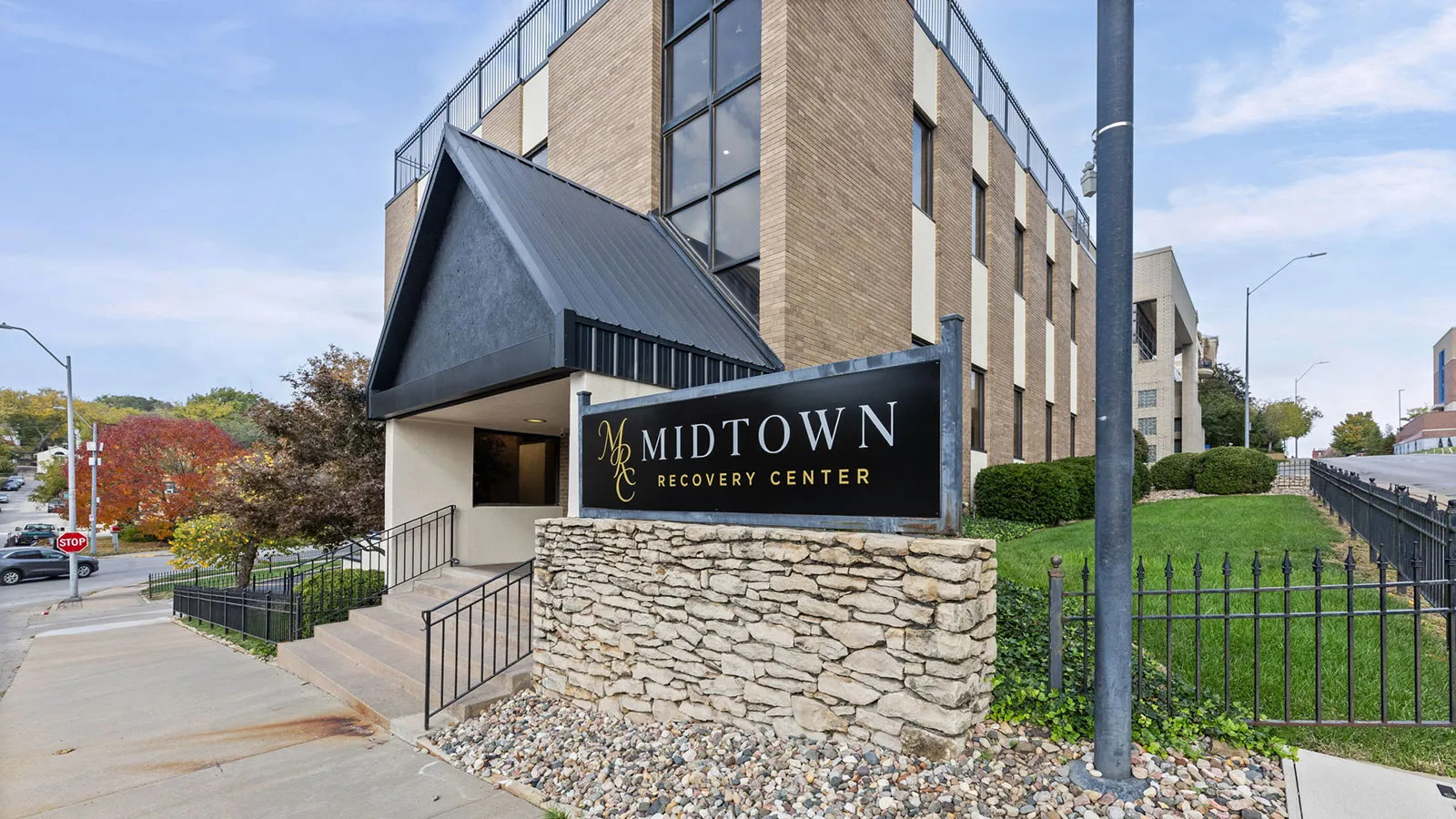
Midtown Recovery Center is at 1000 W 46th Street in Kansas City, Missouri. Treatment takes place in person in a two-story standalone building with three group rooms, private offices, and a client lounge. Ask admissions for directions when you call so your first visit is simple.
How Much Does It Cost
The treatment cost varies significantly depending on the chosen medication and overall treatment plan (non-drug therapies included). The good news is that insurance may help you cover some of the expenses.
Midtown Recovery works with all major commercial insurance companies. Reach out to verify your benefits.
What Happens If You Miss a Dose
Naturally, the best approach here is to stick to your MAT schedule as prescribed by your addiction treatment provider.
The next best thing is to get in touch with your provider right away if you ever miss a dose. They’ll go over your case and find the safest solution for you.
For clients taking Sublocade, the solution may be taking an injection as soon as possible. In this case, the following dose can be taken after 26 days or more.
You should also keep in mind that missing doses can put you at a higher overdose risk.
Take Vivitrol, for instance. Since naltrexone blocks the effects of opioids, missing a dose can make you more sensitive to the effects of opioids. Even doses way lower than what you were used to can be quite dangerous.
For Families: How You Can Help

Family members and friends can play a key role in any recovery journey. Here’s what you can do to support a loved one going through a MAT program.
- Stop the stigma. Some people will say that MAT just trades one addiction for another. Educate yourself on how the program works and don’t fall for misconceptions.
- Get triggers out of the way. Try to identify the places, situations, and people that fuel your loved one’s addiction and protect them from exposure to triggers.
- Familiarize yourself with naloxone. Make sure you know how to access and use naloxone kits. They can be life-savers in cases of overdose!
- Be open to family therapy. Acknowledge that your family dynamics might need healing and accept the help you need.
How to Support Without Policing
With MAT there is a specific temptation: counting doses, asking whether they took it, treating the medication as something to supervise. That turns you into a monitor and them into a suspect. Try this instead:
- Let the care team manage the medication. That is their job, not yours.
- Ask how they are feeling rather than whether they used.
- Push back on stigma, including your own. MAT is medical treatment, not a substitute addiction.
- Set boundaries about your own behavior, stated calmly and kept.
- Bring your worries to a family session rather than confronting them at home.
Family Sessions and Education
Family sessions are part of the program at Midtown Recovery Center and can be held up to once a week, depending on the treatment plan. Your loved one’s treatment team arranges them and helps decide who should take part.
In these sessions you learn how addiction and recovery work, practice honest communication with a clinician in the room, and work on rebuilding trust. After the program, Midtown’s family group, part of our aftercare, offers continued support from other families who understand.
Living Together During MAT
Because MAT is outpatient, your loved one comes home every day. A few things help:
- Keep alcohol and other substances out of the house. For someone on Vivitrol, opioid use after a missed dose carries a higher overdose risk.
- Know where naloxone is and how to use it.
- Keep routines steady and the treatment schedule visible on a shared calendar.
- Learn the warning signs of relapse, such as missed sessions or sudden mood changes, and tell the care team if something worries you.
Taking care of yourself matters too. The family group, part of Midtown’s aftercare, gives you a place to do that.
Aftercare: What Comes After MAT Programs

As we’ve mentioned earlier, the MAT duration can change from one case to another. That said, once the client is ready, the care team recommends the best way to end the program (abrupt cessation vs. dose tapering).
But stopping the medication doesn’t mean that the recovery journey is over. Odds are, the client will shift to a more long-term maintenance and relapse prevention plan, which can include attending 12-step meetings and receiving therapy.
Midtown Recovery’s aftercare services include alumni and family groups.
Find Out More About the Potential of MAT Programs
Using medications to treat and manage addictions may be stigmatized. But it definitely shouldn’t be. After all, it’s not all that different from using prescription medications to manage diabetes or high blood pressure.
In fact, a medication-assisted program can be an effective and life-changing intervention for someone suffering from an alcohol or opioid use disorder.
However, you must remember that every patient is different, and personalized treatment plans are key. From the drug selection to the supporting therapies, there are variables that can be tweaked to suit each client’s needs and preferences.
Don’t hesitate to reach out to learn more about MATs and whether they’re a good fit for your unique situation.
FAQs
What’s the difference between MAT and MOUD?+−
MAT is the umbrella term. Meanwhile, MOUD refers specifically to the medications used for treating opioid use disorders. Buprenorphine and naltrexone are both MOUDs. Naltrexone can also help treat alcohol use disorders, which makes it a MAUD as well.
Does MAT really work?+−
MAT isn't a cure, because addiction is a chronic condition, but it is an effective treatment for it. Research shows that combining medication with counseling and behavioral therapy helps people sustain recovery, and it's the approach the Substance Abuse and Mental Health Services Administration (SAMHSA) endorses. According to SAMHSA, that combination keeps people in treatment longer, improves survival rates, lowers the risk of relapse, and improves a person's chances of finding and keeping a job.
Are MAT programs safe?+−
MAT programs only use FDA-approved medications that have been studied for both safety and efficacy. That being said, any medication can still have its side effects and contraindications. For one, there might be a risk of sudden opioid withdrawal. Sticking to your doctor’s recommended dose can help you reduce that risk. It’s also worth noting that certain drugs used in MAT programs can pass to the baby through blood or breast milk. Make sure to let your care team know if you’re pregnant, breastfeeding, or planning to get pregnant soon.
Does MAT just trade one dependence with another?+−
No, receiving MAT doesn’t mean you’re trading one addiction for another. Just because some medications target opioid receptors doesn’t make them the same as heroin or fentanyl. While there are risks, there are also measures to reduce the risk of developing dependence on the medications. Some medications on the market are actually designed to discourage misuse patterns. That’s exactly what the naloxone in the buprenorphine/naloxone combination does. If the person takes the formulation as indicated, only the buprenorphine works. If someone tries to dissolve and inject the drug to chase a high, the naloxone kicks in and suppresses the high.
Can I drink alcohol while receiving MAT?+−
If you’re enrolled in a MAT program for alcohol dependence, then drinking is counterproductive. Plus, detoxifying your body from alcohol is often a requirement for Vivitrol therapy. But if you do slip and drink, let your MAT provider know as soon as possible. They’re not here to judge, but they do need to know to adjust the treatment plan accordingly.
Will my employer find out I’m receiving a MAT?+−
HIPAA and confidentiality rules still apply to substance use disorder treatment services. In fact, there’s an even higher privacy standard for healthcare providers to uphold with addiction treatment programs compared to regular medical information. The standard is defined by the Confidentiality Regulation, 42 Code of Federal Regulations, Part 2. So, your healthcare provider can’t disclose that you’re enrolled in a MAT program without valid cause.
We Accept Most Major Insurance Plans
Don't let cost be a barrier to recovery. Most treatment is covered by insurance.
Our Team
Clinical Director
LCSW