
Therapy
Dialectical Behavior Therapy (DBT)
Written by: Midtown Recovery Center Editorial TeamPublished: September 23, 2026Updated: October 27, 2026
What Is Dialectical Behavior Therapy?
For people dealing with addiction, emotional dysregulation can make recovery more difficult. Strong emotions may trigger cravings, impulsive decisions, conflict, or a return to substance use. DBT gives people practical skills for responding to those moments differently.
This can be particularly relevant in Kansas City, where substance use disorder is one of the priorities identified in the city’s 2026–2029 Community Health Improvement Plan.
Local behavioral-health resources also recognize the connection between substance use, mental health, stress, and recovery.

At Midtown Recovery Center in Kansas City, MO, DBT is one of the therapeutic approaches used by clinicians whose training includes DBT, alongside other treatment services and levels of care.
Dialectical behavior therapy, or DBT, is a type of talk therapy that teaches practical skills for handling strong emotions. It helps people feel pain without acting on it. That matters in addiction, where drugs or alcohol often become the fastest way to escape a feeling.
Psychologist Marsha Linehan developed DBT in the late 1980s. She first built it for people with chronic suicidal thoughts and self-harming behaviors. Today it’s one of the most studied therapies in mental health treatment.
“Dialectical” means holding two ideas at once. In DBT, those ideas are acceptance and change. You’re doing the best you can, and you can also learn better ways to cope.
DBT commonly teaches four groups of skills:
- Mindfulness: Learning to pay attention to thoughts, feelings, and experiences without immediately reacting to them.
- Distress tolerance: Developing ways to get through difficult situations without turning to harmful or impulsive behaviors.
- Emotion regulation: Understanding emotional responses and learning skills to manage them more effectively.
- Interpersonal effectiveness: Communicating needs, setting boundaries, and navigating relationships more effectively.
These skills can be useful in addiction treatment because substance use may become a way of escaping emotional pain or managing distress. Instead of relying on that immediate response, DBT helps people build alternative coping skills.
DBT has also been studied extensively for borderline personality disorder, self-harm, suicidal behavior, and other problems associated with emotional dysregulation.
The American Psychiatric Association’s current guideline for BPD recommends structured psychotherapy with evidence supporting its use for the core features of the disorder.
Is DBT Right for You?
DBT may be useful if emotional reactions, impulsive behaviors, or difficulty coping with distress are making recovery harder.
Someone receiving addiction treatment may experience intense anxiety, depression, anger, shame, cravings, or other emotions that feel difficult to manage. For some people, these experiences can contribute to substance use or make it harder to maintain recovery.
DBT may be particularly relevant when addiction occurs alongside another mental health concern.
It has been studied in people with borderline personality disorder and substance use disorders, and research suggests that DBT can improve emotion regulation in people experiencing both conditions.
Evidence for reducing substance use is more mixed, however, so DBT is best understood as one part of a broader treatment plan rather than a standalone solution for addiction.
DBT can address skills that are relevant to several common concerns, including:
- Difficulty regulating emotions
- Impulsive or self-harming behaviors
- Anxiety and depression
- Interpersonal conflict
- Cravings and other difficult recovery experiences
- Substance use alongside other mental health conditions
- Borderline personality disorder and related emotional difficulties
DBT does not mean that someone has borderline personality disorder. The therapy was originally developed in that context, but its principles have since been applied to a wider range of mental health and behavioral concerns.
It is also not appropriate to assume that every person with addiction needs DBT. Treatment should be based on an individual’s symptoms, goals, history, safety needs, and other clinical considerations.
What DBT Treats in Addiction Recovery
At Midtown, DBT is used when strong emotions are tangled up with substance use. It is a fit for many of the conditions we treat, including alcohol, opioid, stimulant, benzodiazepine, marijuana, and kratom use disorders, especially when any of these occur alongside a mental health condition.
In practice, DBT skills are aimed at:
- Cravings that spike with emotion: getting through a surge of anger, shame, or anxiety without using
- Impulsive decisions: building a pause between feeling something and acting on it
- Relationship conflict: the arguments and ruptures that often lead back to substance use
- Co-occurring conditions: borderline personality disorder, depression, anxiety, and trauma-related symptoms that drive use
- Self-destructive patterns: responding to crisis moments in ways that do not make things worse
Who DBT May Not Suit, and What to Expect
DBT is a skills-based therapy, so it works best for people who are willing to practice those skills between sessions. It may not be the right starting point for someone who:
- Is in acute withdrawal or a medical crisis that needs to be stabilized first
- Is experiencing active psychosis or a condition that makes it hard to take in and use new skills
- Is not ready to engage with structured homework and group work
DBT is a talk therapy and carries little physical risk. The main discomfort is emotional. Sessions ask you to look closely at difficult moments and the feelings behind them, which can be tiring or stir things up for a while afterward. Your therapist builds coping skills first so that work feels manageable, and sets the pace with you.
A clinical assessment at admission helps determine whether DBT fits your symptoms and goals, and whether another approach, or a different level of care, should come first.
What Is a DBT Session Like?

DBT is skills-focused and practical. Rather than simply discussing difficult experiences, treatment can involve learning specific strategies for handling them.
A session may involve looking at a recent situation in which emotions became difficult to manage. The therapist and client can examine what happened, identify thoughts and behaviors that followed, and consider alternative responses.
The person may then practice coping skills that can be used outside therapy.
For example, someone experiencing a strong craving may learn to notice the emotion and physical sensations associated with the craving without immediately acting on it. They can then use distress-tolerance or emotion-regulation skills to get through the immediate situation.
DBT can involve individual therapy and group skills training. Traditional DBT may also include phone coaching and a therapist consultation team, although the exact structure depends on the treatment setting.
At Midtown, the specific schedule for DBT sessions depends on the treatment program and individual treatment plan. Midtown’s clinicians are credentialed in DBT, CBT, and EMDR.
What You Will Be Asked to Do
DBT asks for active participation. Over the course of treatment, you can expect to:
- Learn skills from the four DBT modules in group, then practice them during the week
- Track your emotions, urges, and the skills you used, often on a simple daily worksheet
- Walk through a recent difficult moment step by step with your therapist to see where a different choice was possible
- Try a new response the next time a similar situation comes up, even when it feels unnatural
- Be honest about slips, including substance use, so they can be worked through rather than hidden
You do not have to get it right the first time. The point is to practice enough that the skills are there when you need them.
How Long DBT Takes at Midtown
Full DBT programs in the community often run for six months to a year. At Midtown Recovery Center, DBT skills are delivered within your level of care rather than as a separate long-term course, so the amount of DBT you receive follows the program you are in:
- Partial Hospitalization Program (PHP): Monday through Saturday, 9:00 am to 2:45 pm, typically four to six weeks.
- Intensive Outpatient Program (IOP): a day track from 9:00 am to 12:00 pm or an evening track from 5:30 pm to 8:30 pm, typically 30 to 90 days.
- Outpatient Program (OP): our most flexible level of care. Your schedule and length of care are set with your treatment team.
Many people continue practicing DBT skills well after their program ends, and the skills are built to carry over into aftercare and daily life.
What Comes After a Session
Each DBT session ends with a specific skill to practice or a situation to approach differently before the next one. That practice between sessions is where the therapy takes hold.
It is common to feel drained after examining a painful moment in detail. Give yourself time to settle, use a distress tolerance skill if you need one, and note what came up. Your next session begins with a review of how the week went and what got in the way, and the plan is adjusted from there.
How Does DBT Work?

DBT combines behavioral strategies with acceptance-based approaches. One of its central ideas is that people can acknowledge where they are while working toward meaningful behavioral change.
The skills taught through DBT are designed to help people pause between an emotional experience and their response to it.
With practice, someone may become better able to recognize triggers, tolerate distress, regulate emotions, and choose behaviors that support longer-term goals.
Mindfulness is one part of this process. Rather than automatically reacting to an emotion, a person learns to observe what is happening in the present moment. Distress tolerance provides additional strategies for surviving difficult moments without making them worse.
Emotion regulation focuses on understanding emotional patterns and reducing vulnerability to overwhelming emotional states. Interpersonal effectiveness addresses relationships, communication, boundaries, and conflict.
For someone in addiction recovery, these skills can become practical coping tools. A stressful interaction, difficult memory, strong craving, or unexpected disappointment does not necessarily disappear, but the person can have more options for responding.
DBT can also be adapted for substance use disorders. DBT-SUD incorporates strategies specifically intended to address problems associated with addiction while retaining the core principles of DBT.
Does DBT Work?
DBT has a substantial research base, particularly for borderline personality disorder, suicidal behavior, self-harm, and emotional dysregulation. The American Psychiatric Association includes structured psychotherapy among its recommended approaches for people with BPD.
A systematic review of DBT skills training for substance use disorder found that the approach was generally feasible and acceptable and offered preliminary evidence for reducing substance use and improving emotion regulation.
More recent research continues to examine DBT among people with co-occurring BPD and substance use disorders.
That distinction matters. DBT can be a valuable component of treatment for someone struggling with addiction and emotional or behavioral difficulties, but treatment outcomes depend on the individual’s needs and the broader recovery plan.
DBT in Your Treatment Plan
DBT does not have to stand alone. It can be incorporated into a broader addiction treatment plan alongside other forms of psychotherapy, behavioral support, medication when appropriate, and family involvement.
At Midtown Recovery Center, treatment is offered at several levels of care.
The Partial Hospitalization Program (PHP) runs Monday through Saturday from 9:00 a.m. to 2:45 p.m., with a typical length of four to six weeks.
The Intensive Outpatient Program (IOP) has two tracks. The day track runs from 9:00 a.m. to noon, while the evening track runs from 5:30 p.m. to 8:30 p.m.
A typical IOP stay lasts 30 to 90 days. The evening schedule can be especially useful for people balancing treatment with work or school.
Midtown also offers Outpatient (OP) care. The schedule and typical length of outpatient treatment are determined as part of the individual’s care planning.
Medication-assisted treatment is also available at Midtown using Suboxone, Sublocade, and Vivitrol.
The goal is to match the intensity and combination of services to the person’s needs rather than treating every recovery journey in exactly the same way.
DBT in Kansas City, MO
Kansas City has a broad network of behavioral-health and substance-use resources. The city’s Health Department provides local information about mental health, substance use treatment, recovery services, crisis support, and community programs.
It also identifies substance use disorder as a major community-health priority for 2026 through 2029. The need for integrated mental health and addiction care is also reflected in local programs.
Kansas City’s Wellness Court, for example, was created through the merger of its municipal Drug Court and Mental Health Court to address co-occurring substance use and mental health conditions.
For someone looking for DBT in Kansas City, the important question is therefore not simply whether a treatment center offers DBT. It is whether the therapy fits into a treatment plan that addresses the person’s substance use, mental health, relationships, and daily life.
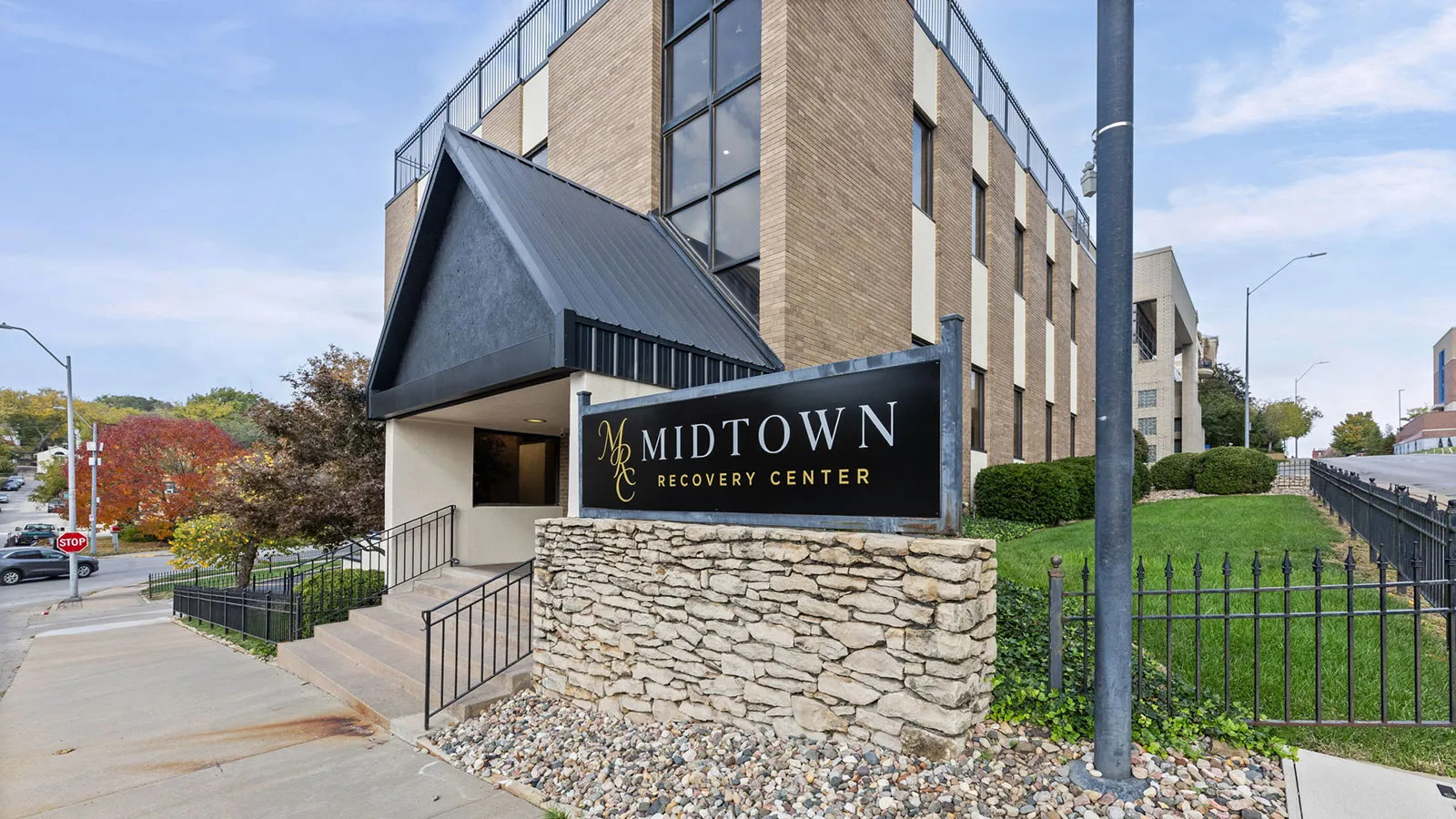
Midtown Recovery Center is located in a two-story standalone building at 1000 W 46th Street in Kansas City, MO. The facility includes three group rooms, private offices, and a client lounge designed to provide a comfortable treatment environment.
Our Clinicians' Training
Midtown’s therapy staff are credentialed in CBT, DBT, and EMDR. The clinical team is led by Joshua Sprung, Clinical Director, and Pamela Tambini, MD, Medical Director.
Many of our team members are in recovery themselves or have seen addiction up close in their own families. That experience shapes how they work with you, while keeping treatment focused on your needs and goals.
For Family

Family members can play an important role in recovery, particularly when addiction and emotional difficulties affect communication and relationships at home.
DBT skills can give families a shared language for discussing emotions, boundaries, communication, and coping. Family members may also benefit from understanding that a strong emotional response is not necessarily a deliberate attempt to create conflict.
At Midtown, family sessions are part of the program and can be held as often as once a week.
Family involvement can help reinforce healthy communication and provide an opportunity to discuss changes that may occur during treatment. It can also help loved ones understand how to support recovery without taking responsibility for the other person’s choices.
Midtown’s aftercare support includes an alumni group, a family group, and relationships with local sober living homes.
Can Family Join Sessions?
Yes. Family sessions are part of treatment at Midtown Recovery Center and can be held up to once a week, depending on your treatment plan and clinical needs.
Your treatment team arranges these sessions and helps decide who should take part and when. Some sessions involve you and your family together, and some time may be spent with family members on their own so they can ask questions and learn how to support you.
Support for families continues after your program ends through Midtown’s family group, which is part of our aftercare.
What Changes to Expect at Home
DBT skills show up at home quickly. You may notice the person in treatment pausing before responding, stepping away from an argument instead of escalating it, or naming a feeling out loud rather than acting on it. This can feel unfamiliar at first, for them and for you.
Boundaries often change as well. Someone practicing interpersonal effectiveness may start asking for things more directly, or saying no where they used to go along. That is the therapy working, even when it is uncomfortable.
For family members, the most helpful things are to keep routines steady, avoid responding to a strong emotion with a stronger one, and give space after a hard session. The family group in Midtown’s aftercare offers support from other families who understand.
DBT Logistics
The cost of DBT depends on the treatment setting and the overall program in which it is provided. Insurance coverage also varies by plan.
Midtown Recovery Center works with all major commercial insurance companies. Midtown does not accept Medicaid or Medicare. People considering treatment can verify their benefits and discuss payment options with admissions before beginning care.
Admissions is available 24 hours a day, seven days a week.
Same-day admission may be available once your insurance is verified and your assessment is complete.
Payment plans are available, and private-pay rates are provided on request.
Does Insurance Cover DBT?
Most commercial health plans cover behavioral health treatment, including therapies like DBT, when it is part of a diagnosed condition and a treatment plan. Exactly what is covered, and at what level of care, depends on your plan.
We work with all major commercial insurance companies. Coverage and reimbursement vary by policy, so verifying your benefits is the best first step. Our admissions team can walk you through what your plan covers before treatment begins.
Payment plans are available, and private-pay rates are provided on request.
FAQs
Does DBT work for addiction?+−
DBT can be useful as part of treatment for substance use, particularly when addiction occurs alongside emotional dysregulation or other mental health concerns. Research supports DBT as a promising approach, although the evidence specifically for substance use disorders remains less established than the evidence for conditions such as borderline personality disorder.
What does DBT help with?+−
DBT teaches skills for mindfulness, distress tolerance, emotion regulation, and interpersonal effectiveness. It has been used for borderline personality disorder, self-harming behaviors, suicidal behavior, substance use, and other problems involving emotional dysregulation.
Do you need borderline personality disorder to use DBT?+−
No. Although DBT was originally developed for people with severe emotional and behavioral difficulties associated with borderline personality disorder, the approach has since been adapted for other mental health and behavioral concerns.
Is DBT the same as CBT?+−
DBT is a form of cognitive-behavioral treatment, but it has its own structure and emphasis. DBT places particular importance on balancing acceptance and change while teaching specific skills for emotion regulation, distress tolerance, mindfulness, and interpersonal effectiveness.
Can DBT help with anxiety and depression?+−
DBT skills may help people manage emotional distress associated with anxiety, depression, and other mental health concerns. Whether DBT is appropriate depends on the person's symptoms and overall treatment needs.
Can DBT help with self-harming behaviors?+−
DBT was originally developed in part to address suicidal and self-injurious behaviors. It teaches skills intended to help people tolerate distress and respond to intense emotions without turning to harmful behaviors.
Our Team
Medical Director
MD
Clinical Director
LCSW
Admissions Coordinator
We Accept Most Major Insurance Plans
Don't let cost be a barrier to recovery. Most treatment is covered by insurance.
Start Your Recovery Today — Same Day Admissions Available
24/7 Admissions Support