
Therapy
EMDR Therapy
Written by: Midtown Recovery Center Editorial TeamPublished: September 23, 2026Updated: October 27, 2026
What Is EMDR Therapy?
Trauma is strongly linked to substance use disorder. Individuals who experienced distressful events as children, including abuse, neglect, or household issues, are more likely to engage in substance abuse later in life.
Studies have shown that post-traumatic stress disorder, or PTSD, and addiction frequently go hand in hand.
Surveys indicate that roughly 13 million Americans reported having PTSD. According to the U.S. Veterans Administration, more than 4 out of 10 Americans (45%) diagnosed with PTSD also struggle with some kind of addiction.

Eye movement desensitization and reprocessing (EMDR) is a psychotherapy designed to alleviate symptoms associated with distressing memories.
While largely used for dealing with trauma, EMDR may also have a role in addiction treatment. If you or someone you know is living with alcohol or drug addiction, rehab centers in Kansas City, Missouri, offer the therapy alongside evidence-based programs.
Here’s everything you should know.
Psychologist Francine Shapiro first developed EMDR therapy in the 1980s. It began as EMD, after Shapiro observed that eye movements reduced unpleasant emotional responses in her patients.
This trauma therapy is based on Adaptive Information Processing (AIP), which suggests that incomplete processing of adverse memories can lead to various mental disorders, including affective disorders and chronic pain.
While traditional talk therapy uses a combination of medication and dialogue, EMDR uses guided eye movements called bilateral stimulation to help patients reprocess feelings associated with uncomfortable experiences.
Who Will Benefit From EMDR Treatment?
Reprocessing traumatic memories is effective for resolving PTSD. Sessions with an EMDR therapist may help with:
- Trauma-related panic attacks
- Anxiety disorders
- Overcoming phobias
- Self-esteem issues
- Dissociative disorders
- Personality disorders
- Eating disorders
- Grief and loss
- Obsessive-compulsive disorders
Addiction treatment providers may incorporate EMDR alongside other therapies like cognitive behavioral therapy (CBT), dialectical behavior therapy (DBT), and motivational interviewing (MI) for dual-diagnosis treatment plans.
What EMDR Treats in Addiction Recovery
At Midtown, EMDR is used when trauma sits underneath substance use. That is common across the conditions we treat, including alcohol, opioid, stimulant, benzodiazepine, marijuana, and kratom use disorders.
In addiction treatment, EMDR targets:
- Trauma and PTSD alongside substance use, where painful memories drive the urge to numb
- Cravings tied to specific memories, places, or people
- Anxiety, depression, and grief that stem from unprocessed experiences
- Shame and negative beliefs about yourself that formed around past events and that make recovery harder to sustain
EMDR does not treat the addiction on its own. It works alongside CBT, DBT, group therapy, and, when appropriate, medication-assisted treatment, so that the trauma and the substance use are addressed together.
When Is EMDR Not Recommended?
Despite dozens of studies backing its effectiveness, there are situations where trauma therapy may not be appropriate.
People who are in an active crisis, such as experiencing severe intoxication, acute withdrawal, or a psychotic breakdown, will need other care first. If you require medical detox before outpatient treatment, our admissions team can refer you to a provider that offers it.
Developing coping strategies and skills is also necessary before someone can process painful memories. Being in treatment doesn’t immediately make someone ready for trauma reprocessing.
Preparation before EMDR therapy is important, and the decision to begin should be made with a licensed clinician who has assessed your history and current stability.
What Happens In an EMDR Session?

An EMDR session directly confronts the traumatic experience or event. The trauma therapist may begin by asking the person to recall or bring certain aspects of the unpleasant memory to mind.
These aspects can be anything, from beliefs, emotions, sensations, or other parts of the selected memory. Some common questions during EMDR are:
- What is the worst part of the memory?
- What emotions do you notice right now as you hold the distressing image in your mind?
- Where do you feel it in your body?
- On a scale of 0-10, how disturbing does it feel?
- What negative beliefs do you have about yourself right now?
As the patient remembers and focuses on the negative event, the therapist may begin applying bilateral stimulation exercises involving rhythmic sensory inputs. This is called memory desensitization.
Bilateral inputs can be tracking an object with their eyes, listening to alternating tones, or observing light bars.
The exercise is performed in brief sets, usually lasting 20 to 30 seconds. The patient is awake and reports what they notice, repeating the process until they no longer feel distressed about the memory.
Then, the therapist will guide them toward positive thoughts and beliefs. Bilateral stimulation reinforces positive feelings.
Treatment is usually structured throughout 8 to 12 meetings. Clinicians utilize a “three-pronged” approach, which focuses on the patient’s past, present, and future in relation to the targeted trauma.
EMDR sessions last for 60 to 90 minutes and usually end with grounding techniques to help the client calm down before wrapping up.
What You Will Be Asked to Do
EMDR is structured, and your therapist guides each step. You will be asked to:
- Share your history so your therapist can plan which memories to work on and in what order
- Learn and practice grounding and calming skills before any memory work begins
- Bring a chosen memory to mind briefly while following the bilateral stimulation, then report what you notice
- Rate how disturbing the memory feels, and how true a more positive belief feels, so progress can be measured
- Use your coping skills between sessions if anything surfaces
You do not have to describe the event in detail or relive it out loud. Many people find that one of the reasons EMDR feels more approachable than they expected.
How Long EMDR Takes at Midtown
A standard EMDR protocol for a single traumatic event often takes 6 to 12 sessions of 60 to 90 minutes. Complex or repeated trauma takes longer, and the preparation phase is not rushed.
At Midtown Recovery Center, EMDR is delivered within your level of care rather than as a separate course, so the timeline follows the program you are in:
- Partial Hospitalization Program (PHP): Monday through Saturday, 9:00 am to 2:45 pm, typically four to six weeks.
- Intensive Outpatient Program (IOP): a day track from 9:00 am to 12:00 pm or an evening track from 5:30 pm to 8:30 pm, typically 30 to 90 days.
- Outpatient Program (OP): our most flexible level of care. Your schedule and length of care are set with your treatment team.
Your therapist decides with you when you are ready to begin reprocessing and how many sessions to plan for, and that is reviewed as treatment goes on.
What Comes After a Session
EMDR sessions end with a closure exercise so you leave feeling grounded. Even so, processing continues after you walk out. In the hours and days that follow, you may feel tired, notice new memories or dreams, or feel unexpectedly lighter.
Your therapist will ask you to keep a brief log of anything that comes up, and to use the calming skills you practiced in preparation. The next session starts with a check-in on that log and a re-evaluation of the memory you worked on before deciding whether to continue with it or move to the next target.
How Does EMDR Work?

The main idea behind eye movement desensitization and reprocessing is that negative experiences like repressed childhood trauma can become “stuck” in the brain. This leads to a wide array of psychiatric and emotional difficulties.
Common manifestations of unresolved trauma are anxiety, depression, PTSD, and substance use disorder.
By stimulating the brain with rhythmic inputs while recalling a distressing memory, EMDR mimics REM sleep and changes how trauma is stored in the person’s memory. This reduces the memory’s emotional intensity, which makes it more manageable.
EMDR is typically implemented in eight phases:
- History Taking: During the initial EMDR sessions, clinicians focus heavily on understanding the patient’s situation and planning a personalized treatment approach. They also define specific “targets” of therapy.
- Preparation: The therapist explains EMDR and teaches the patient practical techniques like deep breathing and relaxation. These are useful for dealing with stress and symptoms of trauma.
- Assessment: As part of the assessment, the clinician determines targets, underlying problems, and their triggers. They work with the patient to identify the specific memory being addressed and rate the distress it’s causing.
- Desensitization: The therapist uses bilateral stimulation to reduce emotional distress in response to recalling traumatic events.
- Installation: Positive emotions and beliefs are “installed” to the distressing memory after negative emotions are reduced. Your clinician employs bilateral stimulation to strengthen the connection.
- Body Scan: A body scan helps identify and process residual physical tensions related to the traumatic experience.
- Closure: This step shifts attention away from the trauma and brings the session to a calm and orderly close. A “calm place visualization” is a common closure technique EMDR therapists use.
During the final stages of EMDR, a treatment re-evaluation reassesses the patient and their memories and ensures treatment is on track. Your healthcare provider will determine whether you need additional sessions.
Is EMDR Effective For Treating Addiction?
While research on its effectiveness for addiction is ongoing, EMDR may be instrumental in treating trauma-related substance use disorder.
Trauma and addiction are often seen together for several reasons. Individuals who experienced trauma can sometimes use drugs, alcohol, or other substances to “self-medicate” and numb painful emotions.
People who have been abused or neglected as children are also more likely to engage in dangerous drug use as adults, feeding the cycle of trauma and SUD.
This happens because trauma and PTSD change how the brain works. Traumatic experiences alter how the body processes fear, stress, and memories.
According to the Substance Abuse and Mental Health Services Administration (SAMHSA) and other surveys:
- As many as 75% of people receiving treatment for addiction have histories of abuse and trauma
- About 12% to 35% in addiction rehab are diagnosed with PTSD
- Those with multiple childhood traumas have higher rates of substance abuse, domestic violence, depression, heart disease, and sexually transmitted illnesses.
Studies show that for those struggling with co-occurring PTSD and SUD, PTSD almost always develops before the addiction. For some patients, treating underlying trauma using EMDR may help resolve alcohol or drug use.
In addition to resolving root trauma, EMDR therapy has also been shown to reduce cravings in people struggling with SUD. Better emotional regulation has been observed as well.
Where EMDR Fits In Your Treatment Plan
Rehab centers may include EMDR as part of their comprehensive dual diagnosis treatment.
A dual diagnosis is when someone is diagnosed with both substance use disorder and mental health issues. About 50% of people suffering from addiction are also living with one serious mental health condition.
Besides PTSD, some other common co-occurring disorders with SUD are:
- Anxiety disorders
- Depression
- Bipolar disorder
- Attention-deficit hyperactivity disorder
- Psychotic disorders
The complex and overlapping symptoms of dual diagnosis can make treatment difficult. Left undiagnosed, an underlying mental health disorder like PTSD can also create a vicious cycle of relapse.
Healthcare providers recognize this and design personalized treatment plans that simultaneously treat the substance abuse and the co-occurring disorder.
Treatment may combine psychotherapies, such as EMDR and CBT, counseling, peer-support groups, and medications.
At Midtown, our therapy staff are credentialed in CBT, DBT, and EMDR.
Where EMDR Fits at Midtown Recovery Center
EMDR is available across our outpatient levels of care:
- Partial Hospitalization Program (PHP): Monday through Saturday, 9:00 am to 2:45 pm, typically four to six weeks.
- Intensive Outpatient Program (IOP): a day track from 9:00 am to 12:00 pm or an evening track from 5:30 pm to 8:30 pm, typically 30 to 90 days.
- Outpatient Program (OP): our most flexible level of care. Your schedule and length of care are set with your treatment team.
Because EMDR requires stability first, your therapist builds coping skills and may begin with CBT or DBT work before reprocessing starts. If you require medical detox or residential treatment before outpatient care, our admissions team can refer you to a provider that offers it.
Our Clinicians' Training
Midtown’s therapy staff are credentialed in CBT, DBT, and EMDR. The clinical team is led by Joshua Sprung, Clinical Director, and Pamela Tambini, MD, Medical Director.
Many of our team members are in recovery themselves or have seen addiction up close in their own families. That experience shapes how they work with you, while keeping treatment focused on your needs and goals.
Supporting a Loved One During Trauma Therapy

EMDR can be highly effective in resolving co-occurring PTSD and underlying trauma in people trying to overcome addiction. However, as with every other treatment, family support can make a world of difference.
There are several ways you can show support:
- Educate Yourself: Learning about trauma, dual diagnosis, and addiction will help you understand your loved one and what they’re going through.
- Listen Without Judgement: Distressing memories can produce unpleasant emotions. Having someone who actively listens without judgement or trying to “fix” the pain is priceless.
- Offer Practical Support: Be available for the person you care about. Helping in everyday tasks, such as cooking meals, running errands, or doing chores, is a wonderful way to show support.
- Stay Calm: Recovery from conditions like addiction and PTSD has its ups and downs. Be a stable, reassuring presence during flashes of anxiety, panic attacks, cravings, and tough moments.
That said, setting boundaries and respecting their independence is also important. You can support your loved one while protecting your own well-being.
Can Family Join Sessions?
EMDR reprocessing itself is done one-on-one with your therapist, so family members do not sit in on those sessions. Family involvement happens through separate family sessions, which are part of treatment at Midtown Recovery Center and can be held up to once a week, depending on your treatment plan.
Your treatment team arranges these sessions and helps decide who should take part. They give your loved ones a place to ask questions, understand how trauma affects recovery, and learn how to support you between sessions. Support for families continues after your program through Midtown’s family group, which is part of our aftercare.
What Changes to Expect at Home
Trauma work is tiring, and that shows at home. In the days after an EMDR session, your loved one may be quieter than usual, need more sleep, or seem emotional without an obvious reason. Vivid dreams and old memories surfacing are common and usually pass.
Over the following weeks, many people become less reactive to things that used to set them off, and cravings tied to those triggers can ease. Some people also start setting boundaries or talking about the past differently.
The most useful things family can do are to keep routines steady, give space to rest after sessions, avoid pressing for details, and let the person share when they are ready.
EMDR Logistics at Midtown Recovery Center
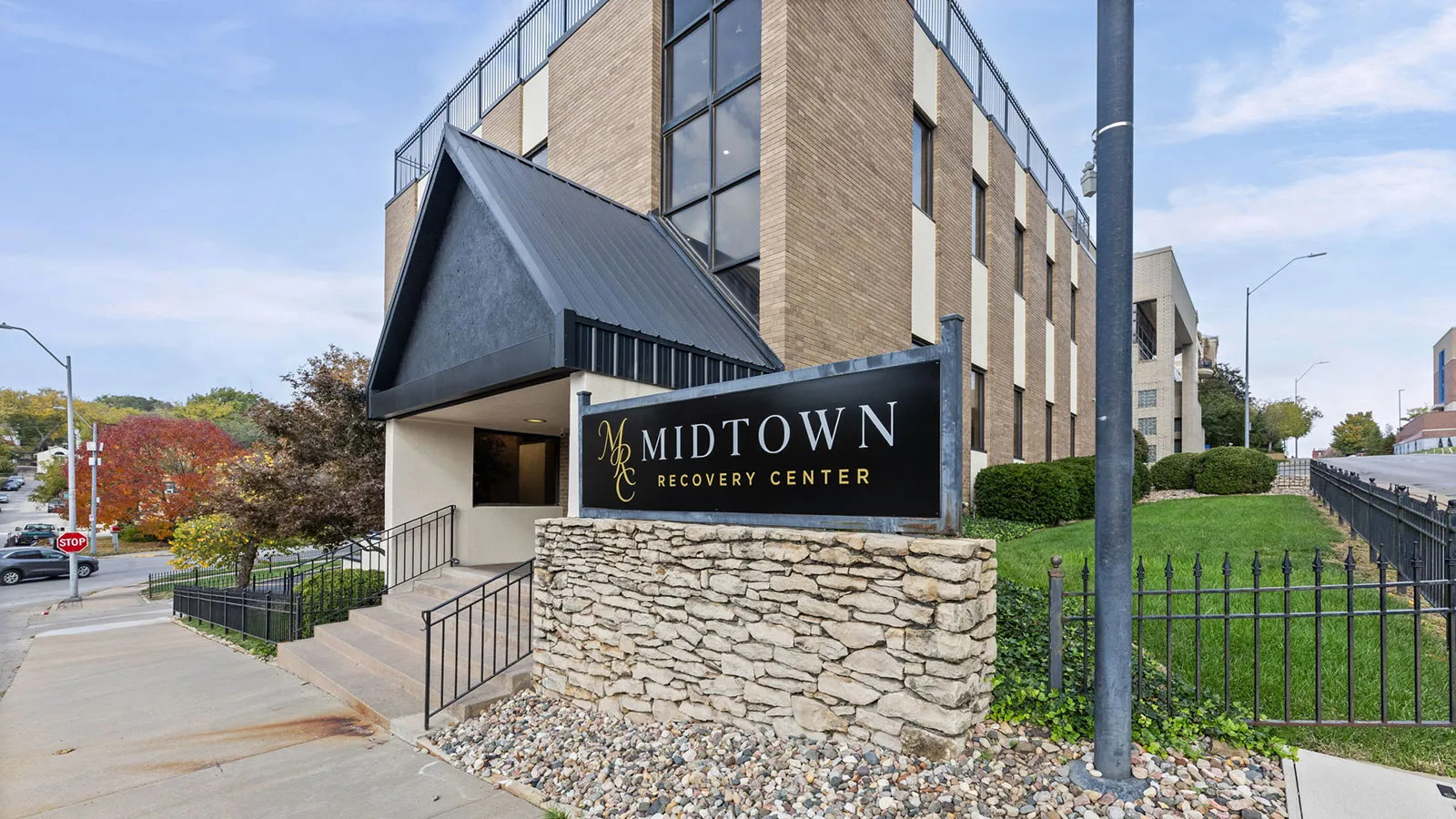
Where Sessions Take Place
Treatment takes place in person at our two-story building at 1000 W 46th Street in Kansas City, MO. The facility has three group rooms, private offices, and a client lounge designed to feel comfortable and private.
Getting Started
Admissions is available 24 hours a day, seven days a week. Same-day admission may be available once your insurance is verified and your assessment is complete.
Your first assessment determines your level of care and whether you are ready to begin EMDR or should build coping skills first. Use the verify button on this page or contact admissions any time to ask your questions.
Does Insurance Cover EMDR?
Your health insurance may cover EMDR and similar therapies. This depends on your specific insurance provider and plan.
Treatment length can dictate how much some insurance will cover. Traditional EMDR can last 60 to 90 minutes, and some policies may cover only up to 45 minutes.
Some private insurance plans have session caps. This limits the total number of therapy meetings they reimburse in one year. You may need to consider the out-of-pocket cost for EMDR.
Before committing, always verify with your insurance company and your treatment provider. We work with all major commercial insurance companies, and payment plans are available. At Midtown, same-day admissions may be available once your insurance is verified and your assessment is complete.
FAQs
Does EMDR therapy stop cravings?+−
Yes, eye movement desensitization and reprocessing can reduce cravings in people suffering from some kind of addiction. It does this by targeting memories associated with substance abuse that trigger cravings.
Who is qualified to perform EMDR therapy?+−
A licensed clinician who has completed EMDRIA-approved training is qualified to practice EMDR. Look for treatment centers that work with EMDR certified therapists.
Can EMDR cure alcoholism?+−
While EMDR can’t directly cure alcoholism or other forms of SUD, it’s been shown to reduce cravings and improve emotional regulation in patients receiving addiction treatment. The therapy may help resolve underlying trauma causing the substance abuse.
Do you have to have PTSD to receive EMDR treatment?+−
EMDR therapy is a well-established treatment for PTSD, but you don’t have to be diagnosed with trauma to receive it. By reprocessing painful memories, trauma therapy may help with other kinds of health issues, such as SUD, OCD, chronic pain, depression, and anxiety.
Is EMDR safe for people recovering from addiction?+−
As a psychotherapy, EMDR is generally safe for people recovering from substance use disorders. But it may not be suitable for patients experiencing an active crisis.
How long does EMDR therapy take?+−
The length of EMDR therapy will depend on the severity of the person’s condition. Reprocessing a trauma event can take 6 to 12 sessions of 60 to 90 minutes of weekly bilateral stimulation therapy.
Our Team
Medical Director
MD
Clinical Director
LCSW
Admissions Coordinator
We Accept Most Major Insurance Plans
Don't let cost be a barrier to recovery. Most treatment is covered by insurance.
Start Your Recovery Today — Same Day Admissions Available
24/7 Admissions Support