
Therapy
Individual, Group, and Family Therapy
Written by: Midtown Recovery Center Editorial TeamPublished: September 23, 2026Updated: October 27, 2026
What Is Individual, Group, and Family Therapy?
Addiction can affect nearly every part of life, from mental health and daily routines to relationships with the people closest to you. But this can change.
Therapy helps people understand the patterns behind substance use, develop healthier coping skills, and work toward lasting recovery. For families, it can also help rebuild trust and improve communication.
Midtown Recovery Center provides outpatient addiction treatment in Kansas City, MO, with individual, group, and family therapy as part of a structured approach to recovery.

Treatment can address substance use disorders alongside related mental health concerns, helping clients build practical skills they can use beyond the treatment setting.
These three approaches offer different ways to work through the challenges associated with addiction and recovery.
- Individual therapy involves one-on-one sessions between a client and a therapist. Sessions provide a private setting to explore personal experiences, recognize triggers, and address concerns that may contribute to substance use. The work can also focus on managing stress, changing harmful patterns, and setting recovery goals.
- Group therapy brings clients together with a trained therapist to discuss shared challenges and practice new skills. Hearing other perspectives can reduce feelings of isolation and help participants learn from people facing similar difficulties. Unlike informal support groups, therapy groups are guided by a clinician and have specific therapeutic goals.
- Family therapy involves family members or other important people in a client’s life, when appropriate. Addiction can affect communication, boundaries, and trust throughout a family. Family sessions provide a structured setting to address these difficulties and develop healthier ways of supporting recovery.
Each approach serves a different purpose. A treatment plan may combine all three, depending on a person’s circumstances, clinical needs, and progress.
Is Therapy Right for You?
Therapy can help people who want to change their relationship with alcohol or other drugs, understand recurring patterns, or strengthen their recovery. It can also support people living with co-occurring disorders, such as substance use disorders and depression or anxiety.
The most appropriate approach depends on an individual’s needs and assessment.
Individual, Group, or Family: Which Fits?
Individual therapy
One-on-one therapy may be useful if you prefer privacy when discussing sensitive experiences or want to explore issues that are difficult to address in a group.
Sessions can focus on personal triggers, relationships, emotional regulation, and the circumstances surrounding substance use.
Individual therapy can also help you identify warning signs of relapse and develop strategies for responding to them.
Progress takes time, and the work may involve confronting uncomfortable feelings or patterns. Your therapist can help you approach these challenges at a manageable pace.
Group therapy
Group therapy may suit people who want to learn alongside others and practice communication in a supportive environment. Participants can exchange perspectives, discuss common challenges, and develop coping strategies with guidance from a therapist.
Speaking in a group can feel uncomfortable at first. You may choose how much to share as you become more comfortable, while following the group’s participation and confidentiality guidelines.
Family therapy
Family therapy may be appropriate when addiction has strained relationships or when relatives need help understanding recovery.
Sessions can address misunderstandings, establish boundaries, and help family members distinguish between supporting recovery and taking responsibility for another person’s choices.
Family participation is not suitable in every circumstance. A clinician can help determine whether involving particular relatives is appropriate and how sessions should be structured.
When Therapy Alone Isn’t Enough
Therapy is not a substitute for urgent medical or psychiatric care when that level of support is needed.
People experiencing severe withdrawal symptoms, an acute mental health crisis, or other urgent medical concerns may need a higher level of care before outpatient therapy is appropriate.
What Is a Therapy Session Like?

The experience depends on the type of therapy and the goals established with your treatment team.
In individual therapy, you may discuss recent experiences, emotional responses, relationships, or situations that increase the urge to use substances. Your therapist may help you identify patterns, examine unhelpful thoughts, and practice alternative responses.
Sessions can also provide time to review progress and adjust recovery goals.
In group therapy, a clinician may introduce a topic, guide a discussion, or lead an exercise designed to build practical skills.
Topics can include managing cravings, handling conflict, responding to stress, and preventing relapse. Participants may contribute their experiences, listen to others, and practice healthier ways to communicate.
In family therapy, clients and participating relatives work with a therapist on concerns affecting their relationships. Sessions may explore communication difficulties, expectations, boundaries, and ways to support recovery without reinforcing harmful patterns.
What You Will Be Asked to Do
Therapy at Midtown is active. What you are asked to do depends on the format:
- In individual therapy: set goals with your therapist, talk honestly about what is happening between sessions, and practice the skills you agree on
- In group therapy: attend consistently, follow the group’s confidentiality and participation guidelines, and share at a level that feels manageable while listening to others
- In family therapy: take part in guided conversations about communication, trust, and boundaries, and follow through on agreements made in session
Across all three, you will be asked to keep showing up, including on the days it feels hard. Steady attendance is one of the strongest predictors of a good outcome.
How Often Sessions Take Place
Individual, group, and family therapy are scheduled within your level of care rather than booked separately. The program you are in sets the overall rhythm:
- Partial Hospitalization Program (PHP): Monday through Saturday, 9:00 am to 2:45 pm, typically four to six weeks.
- Intensive Outpatient Program (IOP): a day track from 9:00 am to 12:00 pm or an evening track from 5:30 pm to 8:30 pm, typically 30 to 90 days.
- Outpatient Program (OP): our most flexible level of care. Your schedule and length of care are set with your treatment team.
Group therapy makes up a large share of programming at the PHP and IOP levels. Individual sessions are scheduled alongside it, and family sessions can be held up to once a week. Your treatment team sets the exact mix and adjusts it as you progress.
How You Might Feel After a Session
Therapy can bring relief, but it can also stir up difficult emotions. Feeling unsettled after discussing painful experiences does not necessarily mean treatment is going badly.
Over time, the aim is to help clients understand these responses and develop healthier ways to manage them.
How Does Therapy Work?

Addiction can become linked to familiar situations, emotional responses, and patterns of thinking. Therapy helps people recognize these connections and practice different ways of responding.
One approach is cognitive behavioral therapy (CBT). CBT helps clients identify thoughts and behaviors that contribute to distress or substance use.
Someone who turns to alcohol after a stressful day, for example, may work with a therapist to recognize the pattern and develop alternative responses to stress.
Another approach is dialectical behavior therapy (DBT). DBT focuses on skills such as emotional regulation, distress tolerance, mindfulness, and interpersonal effectiveness.
These skills can help people manage intense emotions, navigate conflict, and respond to difficult situations without returning to substance use.
The goal is to make healthier responses easier to recognize and practice. Therapy does not remove every trigger or difficult feeling. Instead, it helps clients build skills they can use when challenges arise.
Individual, group, and family therapy can reinforce one another. A client may explore a personal concern in an individual session, practice communication skills in a group, and apply those skills in family relationships.
Does Therapy Work? Evidence and Clinical Guidance
Behavioral therapies are established components of substance use disorder treatment. The National Institute on Alcohol Abuse and Alcoholism explains that treatment can include behavioral healthcare, medication when appropriate, and ongoing support.
The National Institute on Drug Abuse also describes behavioral interventions as important elements of treatment for substance use disorders.
The effectiveness of therapy depends on several factors, including the person’s needs, the quality of care, and whether treatment is appropriate for the severity of the condition. There is no single approach that works the same way for everyone.
Therapy may help clients recognize high-risk situations, manage cravings, improve emotional regulation, and strengthen relationships. These changes can support relapse prevention, although recovery may involve setbacks and adjustments to the treatment plan.
For people with an opioid use disorder, medication-assisted treatment may also be appropriate. Medication and behavioral therapy can serve complementary roles, and treatment decisions should reflect a person’s clinical needs.
Recovery often continues beyond a formal course of treatment. Ongoing therapy, peer support groups, and other recovery resources can help people maintain progress as they return to everyday responsibilities.
How Therapy Fits Into Your Treatment Plan
Midtown Recovery Center offers outpatient treatment through structured levels of care. The right level depends on clinical assessment, individual needs, and the amount of support required.
Where Therapy Fits at Midtown Recovery Center
Partial Hospitalization Program (PHP)
Midtown’s PHP meets Monday through Saturday, from 9:00 am to 2:45 pm. A typical stay lasts four to six weeks, although individual needs may affect the course of treatment.
PHP provides a structured daytime setting for clients who need substantial support while receiving outpatient care. Therapy can help clients address substance use, strengthen coping skills, and work through concerns that affect recovery.
Intensive Outpatient Program (IOP)
Midtown offers two IOP tracks:
- Day track: 9:00 am to 12:00 pm.
- Evening track: 5:30 pm to 8:30 pm.
A typical IOP course lasts 30 to 90 days. The evening option can make treatment more manageable for people balancing recovery with work or school.
An intensive outpatient program provides structured treatment while allowing clients to maintain some daily responsibilities. The treatment team can help determine whether this level of care fits a person’s needs.
Outpatient treatment and clinical support
Midtown also offers an outpatient program, our most flexible level of care, designed for ongoing support.
Who Provides Therapy at Midtown
The clinical team includes Joshua Sprung, Clinical Director, and Pamela Tambini, MD, Medical Director. Midtown’s therapy staff are credentialed in CBT, DBT, and EMDR.
Treatment plans may combine therapy with other appropriate services. Medication-assisted treatment can be considered when clinically indicated, including medications such as Suboxone, Sublocade, or Vivitrol.
The appropriate treatment depends on the substance involved and the client’s medical assessment.
Many of our team members are in recovery themselves or have seen addiction up close in their own families. This shared understanding can inform a compassionate approach while keeping treatment focused on each client’s needs and goals.
Can Family Members Participate in Treatment?

Yes. Family sessions can form part of treatment at Midtown Recovery Center and may take place up to once a week, depending on the treatment plan and clinical needs.
Addiction can affect an entire household. Family members may experience frustration, worry, or uncertainty about what to say and how to help. Clients may also need support in addressing damaged trust or changing relationship patterns.
Can family join sessions
Family therapy gives participants a guided setting to work through these concerns. Sessions may help relatives communicate more clearly, establish boundaries, and recognize behaviors that can undermine recovery. They can also help families develop realistic expectations about the recovery process.
Participation does not mean relatives are responsible for preventing relapse or managing another person’s treatment. Each person has their own role, and a therapist can help clarify what constructive support looks like.
Support can continue after structured treatment ends. Midtown’s aftercare options include an alumni group, a family group, and relationships with local sober living homes.
These resources can help clients and their families remain connected to recovery support as circumstances change.
What Changes to Expect at Home
Therapy does not stay in the therapy room. At home, you may notice your loved one trying new ways of communicating, stepping back from conflict, or setting boundaries they did not set before. Some of this will feel unfamiliar, and some of it may be uncomfortable for the people around them.
Routines usually change as well. Treatment takes up hours of the day or evening, and avoiding old triggers can mean different friends, different plans, and different evenings.
The most helpful things family can do are to keep routines steady, listen without trying to fix things, give space after a hard session, and bring your own questions to a family session rather than sitting with them. Midtown’s family group, part of our aftercare, offers support from other families who understand.
Therapy Logistics at Midtown Recovery Center
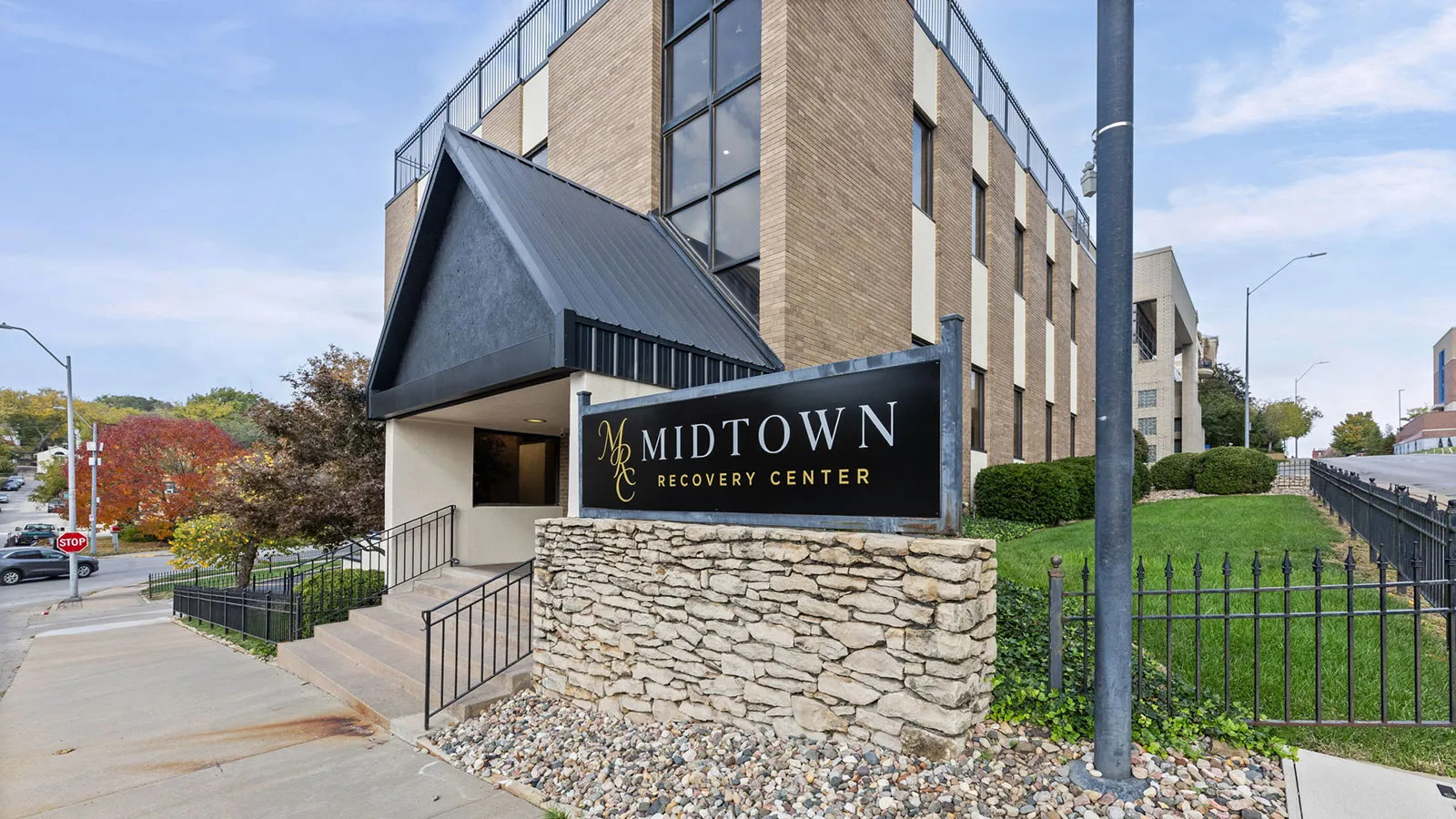
Treatment takes place in person at our two-story building at 1000 W 46th Street in Kansas City, MO. The facility has three group rooms, private offices, and a client lounge designed to feel comfortable and private.
Admissions is available 24 hours a day, seven days a week. Same-day admission may be available once your insurance is verified and your assessment is complete.
Is Therapy Covered by Insurance?
Most commercial health plans cover behavioral health treatment, including individual, group, and family therapy, when it is part of a diagnosed condition and a treatment plan. Exactly what is covered, and at what level of care, depends on your plan.
We work with all major commercial insurance companies. Coverage and reimbursement vary by policy, so verifying your benefits is the best first step. Our admissions team can walk you through what your plan covers before treatment begins.
Payment plans are available, and private-pay rates are provided on request.
FAQs
What is the difference between individual and group therapy?+−
Individual therapy offers private, one-on-one work with a therapist. Group therapy provides a clinician-guided setting where participants can learn from others and practice recovery skills. A treatment plan may include both.
How often does family therapy take place?+−
Family sessions at Midtown may take place up to once a week, depending on the treatment plan and clinical needs. The treatment team can help determine the appropriate frequency.
Do I have to share personal details in group therapy?+−
Group therapy encourages participation, but people may need time to feel comfortable. The therapist guides the discussion and explains expectations for participation and confidentiality.
Is therapy enough to treat opioid addiction?+−
Therapy can be an important part of opioid treatment, but some people also benefit from medication-assisted treatment. A clinical assessment helps determine which combination of services is appropriate.
Is group therapy the same as Alcoholics Anonymous?+−
No. Group therapy is led by a trained therapist and follows clinical goals. Alcoholics Anonymous and other peer support groups offer a different form of support, often based on shared experience and a recovery framework.
How do I get started at Midtown Recovery Center?+−
Contact the admissions team to discuss your situation, complete an assessment, and verify insurance benefits. The team can help determine which level of outpatient treatment may be appropriate. Same-day admission may be available once your insurance is verified and your assessment is complete.
Our Team
Medical Director
MD
Clinical Director
LCSW
Admissions Coordinator
We Accept Most Major Insurance Plans
Don't let cost be a barrier to recovery. Most treatment is covered by insurance.
Start Your Recovery Today — Same Day Admissions Available
24/7 Admissions Support