
Therapy
Cognitive Behavioral Therapy (CBT)
Written by: Midtown Recovery Center Editorial TeamPublished: September 23, 2026Updated: November 4, 2026
What Is Cognitive Behavioral Therapy?
Effective recovery from addiction is about more than detox and taking medications to control cravings and withdrawal symptoms. Counseling and evidence-based behavioral therapy are essential in every comprehensive treatment plan, with CBT at the forefront of such efforts.
If you’re someone with substance use disorder (or a mental disorder) searching for cognitive behavioral therapy (CBT) in Kansas City, MO, this guide is for you.
Read more about what CBT is, if it’s right for you, and what a typical CBT session is like. You’ll also understand how CBT works and what science and research say about its effectiveness.

If you’re ready to seek help for your substance misuse, the medical staff at the Midtown Recovery Center will assess your condition and determine whether CBT is the best course of action.
Cognitive behavioral therapy (CBT) is a type of talk psychotherapy developed in the 1960s and 1970s by Aaron T. Beck, MD, the father of CBT.
This form of therapy focuses on the link between thoughts, feelings, and behaviors; if you can change how you think about a situation, your emotions and actions can be altered, too.
Is Cognitive Behavioral Therapy (CBT) Right for You?
CBT might be right for you depending on the specifics of your condition and your own perception of therapy. Cognitive behavioral therapy works best in the following situations:
- If you have a dependence on alcohol, opioids, cannabis, cocaine, or any other addictive substance and are determined to recognize triggers to prevent future relapses.
- If you’re someone who prioritizes concrete behavioral strategies over open-ended talk therapy.
- If you have a co-occurring mental disorder and substance use disorder (such as an alcohol addiction coexisting with depression, anxiety, or PTSD), also called a dual diagnosis or comorbidity.
- If you’re willing to do homework and practice coping techniques outside of your therapy sessions.
What CBT Treats in Addiction Recovery
At Midtown, CBT is used across the substance use disorders we treat, including alcohol, opioids, stimulants, benzodiazepines, marijuana, and kratom. The approach is the same whatever the substance: find the thoughts and situations that lead to use, then build a different response.
In addiction treatment, CBT is most often used for:
- Cravings and triggers: identifying the people, places, feelings, and times of day that make using more likely, and planning how to handle them
- Relapse prevention: spotting the early warning signs of a slip and having a plan ready before it happens
- Co-occurring conditions: anxiety, depression, and PTSD often sit underneath substance use, and CBT treats them at the same time
- Unhelpful beliefs about recovery: thoughts like “I can’t cope without it” or “one drink won’t matter” that keep the cycle going
Who May Not Be a Good Candidate for CBT
Sadly, CBT doesn’t work for everyone. It’s not recommended for people who:
- Are suffering from severe mental health disorders, such as schizophrenia.
- Are at immediate risk of harming themselves or others.
- Are resistant or unwilling to engage in CBT.
- Lack cognitive abilities or have intellectual disabilities.
For these categories of patients, cognitive behavioral therapy won’t yield as satisfactory results as other person-centered methods.
And in the case where someone is in an emergency crisis, CBT isn’t a suitable first line of treatment, although it might come later when the condition has stabilized.
As for safety considerations, CBT poses significantly low physical risks. Patients might experience discomfort or temporary stress as they confront hard truths about their beliefs, thoughts, feelings, or behaviors.
What a CBT Session Is Like

CBT sessions are 45–60 minutes long (sometimes shorter), and they’re normally one-on-one (individual therapy). CBT can also be used in group therapy, called Cognitive-Behavioral Group Therapy (CBGT) or a CBT skills group.
A cognitive behavioral therapy session tends to go as follows:
- CBT therapists have an in-depth discussion with their clients to pinpoint their aspirations and determine the goals that therapy will work toward. This step isn’t part of every session; it’s early in the treatment process itself.
- Every session onward starts with the therapist gathering information about the clients’ concerns, addiction-related struggles, and other issues they’d like to resolve. Then, together they agree upon an agenda for this specific session.
- After agreement, the pair approaches each topic on their agenda. The therapist first collects data about the problem at hand, then begins to peel back unhelpful beliefs that their client might have about it.
- The therapist helps the client recognize harmful thoughts for what they are and how they’re interfering with their emotions and actions. They both settle on a strategic action plan for the patient to follow until the next session.
- Each session ends with a measure of the client’s progress by asking them to offer reports on their moods and functioning.
The number of CBT sessions varies according to the intensity of your treatment program, which depends on the severity of the condition and whether you’ll be treated for a co-occurring disorder alongside your addiction.
- Short-term concerns (Mild phobias, stress, or addiction): 6–8 sessions
- Standard (General anxiety, depression, or moderate cases of addiction): 8–12 sessions
- Severe (Complex anxiety disorders, PTSD, or advanced substance use disorder): More than 20 sessions
What You Will Be Asked to Do
CBT is an active therapy, so you will be asked to take part rather than simply talk. Expect your therapist to ask you to:
- Set clear goals for what you want to change, then check progress against them
- Notice and write down the thoughts that show up before a craving or a low mood
- Test those thoughts against the evidence instead of accepting them automatically
- Practice new skills between sessions, such as coping strategies, problem solving, or a planned response to a known trigger
- Be honest about slips and setbacks so they can be worked through rather than hidden
None of this has to be perfect. Your therapist sets the pace with you, and the homework is designed to fit around your life, not take it over.
How Long CBT Takes at Midtown
At Midtown Recovery Center, CBT is built into your level of care rather than scheduled as a separate course of sessions. How much CBT you receive, and over how long, follows the program you are in:
- Partial Hospitalization Program (PHP): Monday through Saturday, 9:00 am to 2:45 pm, typically four to six weeks.
- Intensive Outpatient Program (IOP): a day track from 9:00 am to 12:00 pm or an evening track from 5:30 pm to 8:30 pm, typically 30 to 90 days.
- Outpatient Program (OP): our most flexible level of care. Your schedule and length of care are set with your treatment team.
Within each program, CBT runs through individual sessions and skills groups. Your treatment plan is reviewed as you go, and the number of sessions is adjusted to how you are progressing rather than fixed in advance.
What Comes After a Session
Each CBT session ends with something to take with you: a thought to track, a skill to try, or a situation to handle differently. That practice between sessions is where most of the change happens.
It is normal to feel tired or unsettled after working through difficult thoughts. Give yourself some space, and bring whatever came up to your next session. Your therapist starts each session by checking in on how the homework went and what got in the way, then adjusts the plan from there.
How CBT Works for Addiction Treatment

Cognitive behavioral therapy teaches addiction patients that their “automatic thoughts” aren’t always rational or logical. Automatic thoughts are impulsive ideas that stem from harmful misconceptions, doubt, and fear that those patients have about their own image.
Before therapy, when people come face-to-face with these negative beliefs, their immediate reaction is to self-medicate or drink as a coping mechanism.
CBT helps patients understand this toxic pattern by exposing them to their problematic thoughts until the pain associated with them gradually decreases. Then, the link to harmful (addictive) behavior is broken, and in its place, clients learn positive and healthy coping skills.
Does CBT Work? Here’s the Evidence
You might be convinced that CBT only works in theory, but scientific studies back it up as an effective treatment method for people with addiction or mental disorders. This is why CBT is labeled as evidence-based, as it’s one of the most extensively researched modalities.
Below are some important research findings about CBT’s efficacy in treating substance use disorder and other mental disorders:
- A review of 52 randomized clinical trials shows that CBT outperforms no-treatment or standard minimal care in reducing substance consumption.
- An NIH evaluation found that the coping skills learned in CBT sessions (a standard duration of 12 sessions) are long-lasting, though effects are strongest when combined with early follow-ups (within 1–6 months) instead of later (8 months and longer).
- CBT is most effective when combined with medication-assisted treatment (MAT), motivational interviewing (MI), and contingency management (CM).
- For depression, a meta-analysis of over 400 trials (more than 52,000 patients) found that CBT yields a moderate-to-large post-treatment effect (g = 0.79), with response rates of 42% compared to 19% for control conditions.
Cognitive Behavioral Therapy in Your Treatment Plan
Wondering where CBT fits into your treatment program? Whether you’re being treated for substance use or a mental disorder, cognitive behavioral therapy is part of the broader behavioral therapy umbrella (or counseling) that comes after initial assessment.
Evidence-based modalities, such as cognitive behavioral therapy (CBT) and dialectical behavior therapy (DBT), are used in talk psychotherapy, which is paired with FDA-approved medications to make up medication-assisted treatment (MAT).
All of them fit within a partial hospitalization program (PHP), intensive outpatient program (IOP), or standard outpatient program (OP), as your healthcare provider sees fit after evaluating your condition and individual needs.
At the Midtown Recovery Center, our therapy staff is credentialed in CBT, DBT, and EMDR. With a focus on compassion, professionalism, and unwavering optimism, you’ll be adequately supported on your road to recovery.
Where CBT Fits at Midtown Recovery Center
CBT is a core part of every level of care we offer:
- Partial Hospitalization Program (PHP): Monday through Saturday, 9:00 am to 2:45 pm, typically four to six weeks.
- Intensive Outpatient Program (IOP): a day track from 9:00 am to 12:00 pm or an evening track from 5:30 pm to 8:30 pm, typically 30 to 90 days.
- Outpatient Program (OP): our most flexible level of care. Your schedule and length of care are set with your treatment team.
CBT is often paired with DBT skills, EMDR for trauma, group and family therapy, and, when clinically appropriate, medication-assisted treatment with Suboxone, Sublocade, or Vivitrol. Your assessment determines the mix.
Our Clinicians' Training
Midtown’s therapy staff are credentialed in CBT, DBT, and EMDR. The clinical team is led by Joshua Sprung, Clinical Director, and Pamela Tambini, MD, Medical Director.
Many of our team members are in recovery themselves or have seen addiction up close in their own families. That experience shapes how they work with you, while keeping treatment focused on your needs and goals.
CBT for Family: Is It Possible?

Yes, you (as someone who supports a loved one dealing with addiction or a mental health crisis) can be part of their CBT sessions. This is a more specialized approach, called Cognitive Behavioral Family Therapy (CBFT) or family-integrated CBT.
In family-integrated CBT sessions, individuals learn how to support, encourage, and maintain the use of CBT skills at home for effective treatment of addiction. Family members also get education on how to deal with the stress that comes with having a sibling, child, or parent in recovery.
The structure of a session can vary based on who the therapist deems fit to attend.
For example, if it’s an adolescent child receiving therapy, the first segment of the session can be spent with them alone, then the next segment with the parent alone for coaching, then the last segment as a joint unit.
The Midtown Recovery Center offers family programming as part of treatment plans, with the ability for sessions to be held up to once a week.
Can Family Join Sessions?
Yes. Family sessions are part of treatment at Midtown Recovery Center and can be held up to once a week, depending on your treatment plan and clinical needs.
Your treatment team arranges these sessions and helps decide who should take part and when. Some sessions involve you and your family together, and some time may be spent with family members on their own so they can ask questions and learn how to support you.
Support for families continues after your program ends through Midtown’s family group, which is part of our aftercare.
What Changes to Expect at Home
Because CBT assigns practice between sessions, some of it will be visible at home. You may be writing in a thought log, stepping away from a situation you used to push through, or trying a new response to stress that feels awkward at first.
Routines often shift too. Avoiding old triggers can mean changing who you see, where you go, and how evenings look. That adjustment can feel strange for everyone in the house for a few weeks.
For family members, the most useful things you can do are simple: keep routines steady, give space after a hard session, ask how you can help rather than guessing, and let the person share what they are working on when they are ready.
Cognitive Behavioral Therapy Logistics
Most of the hesitation associated with starting therapy comes from not having all the answers to practical questions like: Does insurance cover it? What happens if I call? Where will I be receiving CBT?
This section goes over some of these logistics to put your mind at ease.
What Happens When You Call
Admissions are open 24/7, so you can rest assured that we’re always within reach. Same-day admission can be arranged, but first, your insurance needs to be verified and your assessment completed.
Where You’ll Be Treated
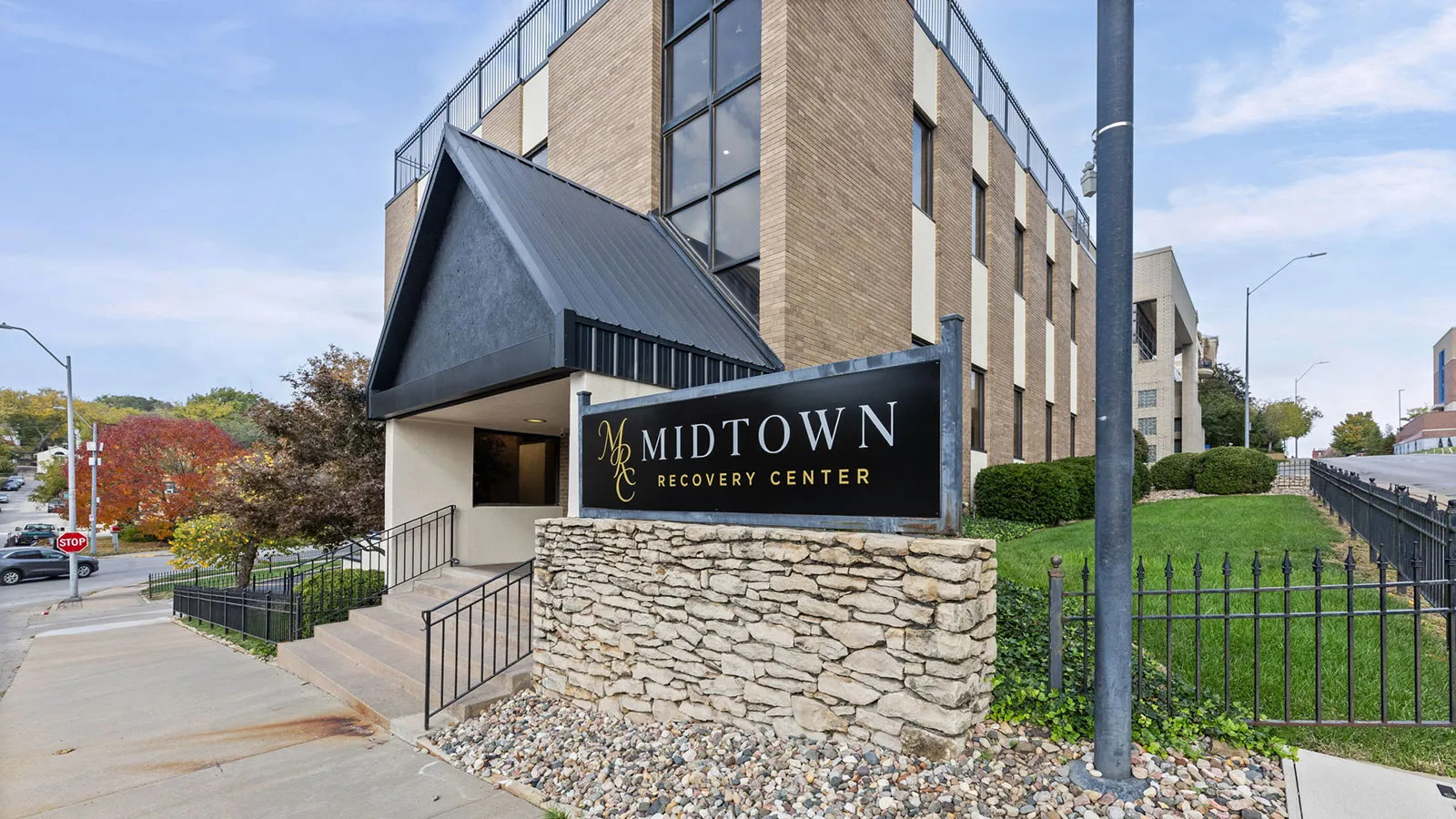
The Midtown Recovery Center is designed to offer maximum comfort to patients seeking treatment for addiction or mental health disorders.
The facility is a two-story standalone building at 1000 W 46th Street, Kansas City, Missouri, with three group rooms, private offices, and a client lounge.
Does Insurance Cover CBT Sessions?
Yes, most health insurance plans cover cognitive behavioral therapy (CBT) sessions, as required by the Affordable Care Act (ACA). According to this law, insurers must cover mental health services to the same degree as physical health services, including CBT.
However, for that to happen, insurers require a diagnosis and a treatment plan from a licensed provider to approve coverage. At the Midtown Recovery Center, we work with all major commercial insurance companies to take some of the financial burden off your shoulders.
FAQs
Does CBT work for people with addiction?+−
Yes, CBT is widely used to treat people with substance use disorder. It’s a staple in addiction treatment plans that involve both medication management and behavioral therapy. CBT helps addiction patients identify triggers, correct harmful thought patterns, build coping skills, and prevent relapse.
How long does it take to start seeing results from CBT?+−
Many patients start seeing initial results from cognitive behavioral therapy within four to six sessions. CBT’s effectiveness depends on several factors, such as the condition’s complexity and duration, how comfortable a person is with their therapist, and homework consistency (outside the mandated weekly sessions).
What mental health disorder is CBT most effective for?+−
Besides addiction (substance use disorder), CBT is a core treatment for anxiety disorders, depression, post-traumatic stress disorder (PTSD), obsessive-compulsive disorder (OCD), eating disorders, and attention-deficit/hyperactivity disorder (ADHD).
What are the five main stages of CBT?+−
The five stages of cognitive behavioral therapy (CBT) are: assessment, formulation, socialization, intervention, and relapse prevention. In assessment, the patient and therapist discuss current struggles (like addiction or a mental health condition), tracing their symptoms and history. The formulation stage is about building a shared understanding of why the addiction happens by connecting it to thoughts, emotions, and behaviors. In socialization, the therapist educates their patient on how treatment will go in the intervention phase. After applying active techniques to correct unhelpful behavior during intervention, relapse prevention takes place. The pair reviews the client’s progress, then works on a long-term maintenance plan in preparation for a drug-free life ahead.
Are there any downsides to cognitive behavioral therapy?+−
Yes, and it helps to know them going in. Facing difficult thoughts and emotions can bring up discomfort, anger, or sadness, and some sessions leave people feeling drained. CBT also asks for real time and effort, including practice between sessions. Some people find it rigid or formulaic, though that structure is part of why it works so well, with success rates of 38% to 82% reported in PubMed research. Progress isn't a straight line, and ups and downs along the way are normal. CBT is also less suited to people with significant cognitive limitations or complex personality disorders.
What is the difference between CBT and other types of talk therapy?+−
The difference is that CBT focuses more on how thoughts and misconceptions about a person’s self influence their behaviors. Other forms of therapy may prioritize exploring deeper emotional issues, how past trauma causes emotional distress, and similar deep-seated concepts.
Our Team
Clinical Director
LCSW
We Accept Most Major Insurance Plans
Don't let cost be a barrier to recovery. Most treatment is covered by insurance.
Start Your Recovery Today — Same Day Admissions Available
24/7 Admissions Support