
Therapy
Exposure and Response Prevention (ERP)
Written by: Midtown Recovery Center Editorial TeamPublished: September 23, 2026Updated: October 27, 2026
What Is Exposure and Response Prevention (ERP)?
For someone living with obsessive-compulsive disorder (OCD), intrusive thoughts and compulsive behaviors can become difficult to control. The more a person tries to avoid a feared situation or perform a ritual to reduce anxiety, the stronger the cycle can become.
Exposure and response prevention (ERP) is a specialized form of cognitive behavioral therapy (CBT) designed to interrupt that cycle. ERP is primarily an evidence-based treatment for OCD, rather than a treatment for substance use disorder itself.
However, OCD and substance use disorders can occur together, and untreated OCD symptoms can complicate recovery. A treatment plan may therefore need to address both conditions rather than treating one and overlooking the other.

Exposure and response prevention is a specialized form of cognitive behavioral therapy that helps people gradually face situations, thoughts, images, or sensations that trigger obsessive fears. It’s also about learning not to respond with compulsions or avoidance.
The two parts of ERP work together:
- Exposure: The person gradually confronts a feared trigger, either in real life or through thoughts and images.
- Response prevention: The person resists the usual compulsion, ritual, avoidance behavior, or mental response that would normally be used to reduce distress.
For example, someone with contamination-related OCD may feel compelled to wash their hands repeatedly after touching something they consider dirty. In ERP, a trained therapist may help them approach an appropriate exposure and then resist the urge to wash immediately.
The goal is not to prove that the feared thought is impossible. Instead, the person learns that anxiety and uncertainty can be tolerated without relying on a compulsion.
ERP has been studied for decades and is considered a first-line psychological treatment for OCD.
The International OCD Foundation describes it as the most effective, evidence-based psychological treatment for OCD, while the National Institute of Mental Health identifies ERP as a specific form of CBT that can reduce compulsive behaviors.
Is ERP Right for You?
ERP may be appropriate when OCD symptoms are interfering with daily life, relationships, work, school, or recovery.
It can address many forms of OCD, including contamination fears, checking, intrusive thoughts, perfectionism, scrupulosity, and other patterns involving obsessions and compulsions.
OCD can also occur alongside other mental health conditions. Anxiety disorders and depression may occur with OCD, and some people experience related conditions such as panic attacks, social anxiety, or PTSD. OCD can also coexist with substance use disorder.
For someone receiving addiction treatment, it is important to distinguish OCD symptoms from cravings or other compulsive behaviors associated with substance use. ERP does not replace treatment for addiction.
Instead, when OCD and substance use disorder occur together, the treatment plan may need to address both conditions. Research and clinical guidance support comprehensive assessment and concurrent treatment when appropriate.
What ERP Treats When OCD and Addiction Overlap
ERP treats the OCD cycle, not the addiction. Its place in recovery is in the overlap between the two: when obsessions and compulsions make it harder to stay sober, or when substance use has become a way of quieting intrusive thoughts.
In that overlap, ERP is aimed at:
- Intrusive thoughts that drive drinking or drug use as a way to escape them
- Compulsions and rituals that take up so much time and energy that treatment attendance suffers
- Avoidance that keeps someone from group therapy, work, or relationships that support recovery
- Reassurance seeking that pulls family members into the OCD cycle
Cravings, withdrawal, and relapse prevention are addressed through addiction treatment itself: CBT, DBT, group therapy, and, when appropriate, medication-assisted treatment.
What are the risks?
ERP deliberately brings a person into contact with situations that cause anxiety or distress, so temporary discomfort is expected. Anxiety may increase during an exposure before becoming easier to tolerate.
The purpose is not to overwhelm someone or force them into a situation they are not prepared to face.
A qualified clinician should assess whether ERP is appropriate and determine the pace of treatment.
Factors such as severe depression, very poor insight, active bipolar disorder or psychosis, substance use, and significant family conflict may affect treatment planning and response.
ERP should therefore be conducted by a clinician with appropriate training and experience rather than attempted as an unstructured exercise in confronting fears.
What Is an ERP Therapy Session Like?

ERP generally begins with an assessment and education about OCD. The therapist works with the person to understand their obsessions, compulsions, avoidance patterns, and the situations that trigger distress.
The therapist and client then develop an exposure hierarchy. This is a planned progression of situations or triggers, usually beginning with manageable challenges and gradually moving toward more difficult ones.
During an exposure, the person practices remaining with the situation without performing the usual compulsion or avoidance behavior. The therapist provides guidance and helps the person learn how to respond differently to anxiety and uncertainty.
ERP does not require a person to disclose every private thought or traumatic experience. The focus is on identifying the patterns that maintain OCD and developing practical ways to interrupt them.
Practice between sessions is also an important part of treatment. ERP is a skill-based therapy, so progress depends partly on repeatedly applying what is learned outside the therapy room.
The International OCD Foundation notes that a typical course can range from approximately 12 to 20 sessions, although treatment length varies according to individual needs.
After an exposure, a person may feel tired, anxious, relieved, or uncertain. These reactions do not necessarily mean that treatment is going badly. Over time, repeated practice can make it easier to tolerate distress without returning to compulsive behaviors.
What You Will Be Asked to Do
ERP is active and structured. Over a course of treatment, a person is asked to:
- Map out obsessions, compulsions, and the situations that trigger them
- Build an exposure hierarchy with the therapist, from easier situations to harder ones
- Approach a chosen trigger during sessions and stay with the discomfort without performing the ritual
- Repeat those exposures between sessions and log what happened
- Resist asking for reassurance, including from family, when the urge comes up
The pace is set together. Nobody is asked to face their biggest fear on day one.
How Long ERP Takes
A typical ERP course runs about 12 to 20 sessions, usually weekly, with sessions often lasting 60 to 90 minutes so there is time for a full exposure. More intensive formats compress the same work into a shorter period.
Length depends on how severe the OCD is, how many areas it touches, and how consistently exposures are practiced between sessions. People with co-occurring substance use often need addiction treatment to be stable before ERP begins in earnest.
What Comes After a Session
After an exposure session, it is common to feel tired, anxious, or relieved, sometimes all at once. Anxiety that rose during the session usually settles over the following hours.
Each session ends with homework: the same exposure, or a related one, to repeat before the next meeting. The next session begins by reviewing how those practices went and whether to move up the hierarchy.
How Does ERP Work?

OCD can create a cycle in which an intrusive thought or feared situation produces anxiety, followed by a compulsion or avoidance behavior that temporarily reduces that anxiety.
The temporary relief can reinforce the cycle. The person learns, in effect, that performing the ritual was necessary to feel safe.
ERP changes that pattern by breaking the connection between anxiety and the compulsive response.
The person encounters a trigger and remains with the resulting discomfort without completing the ritual. With repeated practice, they can learn that anxiety and uncertainty are manageable and that they do not have to act on every obsessive thought.
Traditional explanations of ERP often emphasize habituation, the natural reduction in anxiety that can occur when a person remains in a feared situation without performing a compulsion.
Contemporary ERP also incorporates inhibitory learning, in which new learning competes with the old fear association.
The goal is not necessarily to make anxiety disappear before a person can move on. It is to help them develop a different relationship with fear, uncertainty, and intrusive thoughts.
Does ERP Work? Evidence and Endorsements
ERP has one of the strongest evidence bases among psychological treatments for OCD.
A systematic review and meta-analysis of 36 randomized controlled studies involving 2,020 participants found a large overall effect in favor of CBT with ERP compared with control conditions.
Another meta-analysis examined 39 randomized controlled trials involving 1,793 participants and found that ERP produced a significant benefit for OCD compared with control conditions.
The analysis also found reductions in anxiety and depression symptoms among people receiving ERP.
More recent research continues to support ERP. In a 2024 clinical trial involving adolescents and adults with OCD, 86% of participants receiving ERP met the study’s criteria for treatment response, compared with 32% receiving a stress-management control intervention.
Clinical guidelines also recognize CBT that includes ERP as an important treatment option for OCD. NICE recommends CBT including ERP at different levels of intensity depending on symptom severity and functional impairment.
That evidence does not mean ERP works identically for everyone. OCD varies considerably from person to person, and treatment may need to be adjusted when depression, substance use, or other conditions are also present.
ERP in Your Treatment Plan
When OCD occurs alongside addiction, treatment planning can become more complicated. A person may use alcohol or drugs in an attempt to manage anxiety, intrusive thoughts, or other distressing symptoms.
At the same time, substance use can make it harder to participate consistently in OCD treatment.
For this reason, assessment matters. Clinicians need to understand which symptoms relate to OCD, which relate to substance use, and whether another condition is contributing to the person’s difficulties.
Evidence-based addiction treatment may address substance use, cravings, relapse prevention, and the underlying factors contributing to continued use. ERP, when clinically appropriate, addresses the OCD cycle itself.
Other therapies may also have a role. CBT can support broader behavioral and cognitive changes, while dialectical behavior therapy (DBT), acceptance and commitment therapy (ACT), mindfulness-based approaches, or other interventions may be incorporated according to a person’s needs.
Where ERP Fits at Midtown Recovery Center
ERP is not currently offered at Midtown Recovery Center. If ERP is the right fit for you, our admissions team can refer you to a provider that offers it, while our clinicians treat the substance use and any other co-occurring concerns.
OCD symptoms are assessed as part of treatment planning, and our outpatient levels of care address the substance use and co-occurring anxiety or depression that often come with them:
- Partial Hospitalization Program (PHP): Monday through Saturday, 9:00 am to 2:45 pm, typically four to six weeks.
- Intensive Outpatient Program (IOP): a day track from 9:00 am to 12:00 pm or an evening track from 5:30 pm to 8:30 pm, typically 30 to 90 days.
- Outpatient Program (OP): our most flexible level of care. Your schedule and length of care are set with your treatment team.
What Midtown Recovery Center Offers
Midtown Recovery Center provides multiple levels of addiction treatment, including Partial Hospitalization, Intensive Outpatient, Outpatient, and Medication-Assisted Treatment.
Its PHP operates Monday through Saturday from 9:00 a.m. to 2:45 p.m., with a typical length of four to six weeks. The IOP includes a daytime track from 9:00 a.m. to noon and an evening track from 5:30 p.m. to 8:30 p.m., with a typical length of 30 to 90 days.
The evening IOP track may be particularly useful for people who need to continue working or attending school while participating in treatment.
Medication-Assisted Treatment at Midtown includes Suboxone, Sublocade, and Vivitrol. Aftercare can include an alumni group, a family group, and relationships with local sober living homes.
ERP is not currently offered at Midtown Recovery Center. If ERP is the right fit for you, our admissions team can refer you to a provider that offers it, while our clinicians treat the substance use and any other co-occurring concerns.
The clinical leadership team includes Joshua Sprung, Clinical Director, and Pamela Tambini, MD, Medical Director. The therapy staff are credentialed in CBT, DBT, and EMDR.
For Family Members

Family members can play an important role when OCD and addiction occur together.
Family accommodation can sometimes unintentionally reinforce OCD. For example, a loved one may repeatedly provide reassurance, participate in rituals, or help the person avoid situations that trigger anxiety.
Although these actions may provide short-term relief, they can make the OCD cycle harder to break.
Family involvement should therefore be guided by the treatment team. The National Institute for Health and Care Excellence (NICE) recommends considering family involvement in ERP when it is appropriate and acceptable to both the person receiving treatment and the family member.
At Midtown, family sessions can be held up to once a week as part of the program.
Families can also support recovery by learning the difference between helping someone manage genuine needs and helping maintain compulsive patterns.
When addiction is also present, families may need support in understanding both conditions and responding consistently to changes in behavior.
Can Family Join Sessions?
In ERP, family involvement is usually about reducing accommodation rather than sitting in on exposures. A therapist may meet with family members to explain the OCD cycle and agree on how to respond to requests for reassurance or help with rituals.
At Midtown Recovery Center, family sessions are part of treatment and can be held up to once a week, depending on the treatment plan. Your treatment team arranges them and helps decide who should take part. Support for families continues after the program through Midtown’s family group, which is part of our aftercare.
What Changes to Expect at Home
ERP changes the household’s role in OCD. If family members have been answering the same question repeatedly, checking locks or stoves on request, or avoiding certain places, the treatment team will likely ask them to stop. That can feel unkind at first, and the person with OCD may be more anxious for a while.
Over the following weeks, rituals usually shorten and the demands on family ease. The most useful things family can do are to follow the plan agreed with the therapist, stay calm when anxiety rises, and avoid stepping in to relieve it.
ERP Therapy in Kansas City: What to Know About Logistics
ERP is generally provided as an in-person psychological treatment, although the appropriate format depends on the provider and treatment plan.
ERP is not currently offered at Midtown. If you need it, our admissions team can refer you to a provider that offers it.
Insurance coverage for behavioral health treatment varies by plan, diagnosis, provider, and level of care. Midtown works with all major commercial insurance companies, but treatment is provided out of network. Benefits should be verified before treatment begins.
Midtown does not accept Medicaid or Medicare. Payment plans are available, and private-pay rates are provided on request.
Admissions is available 24 hours a day, seven days a week. Same-day admission may be available once your insurance is verified and your assessment is complete.
Does Insurance Cover ERP?
Most commercial health plans cover behavioral health treatment for a diagnosed condition such as OCD, including CBT-based therapies like ERP. What is covered, and at what level of care, depends on the plan and the provider delivering it.
We work with all major commercial insurance companies. Coverage and reimbursement vary by policy, so verifying your benefits is the best first step. Our admissions team can walk you through what your plan covers before treatment begins.
Payment plans are available, and private-pay rates are provided on request.
Where Treatment Takes Place
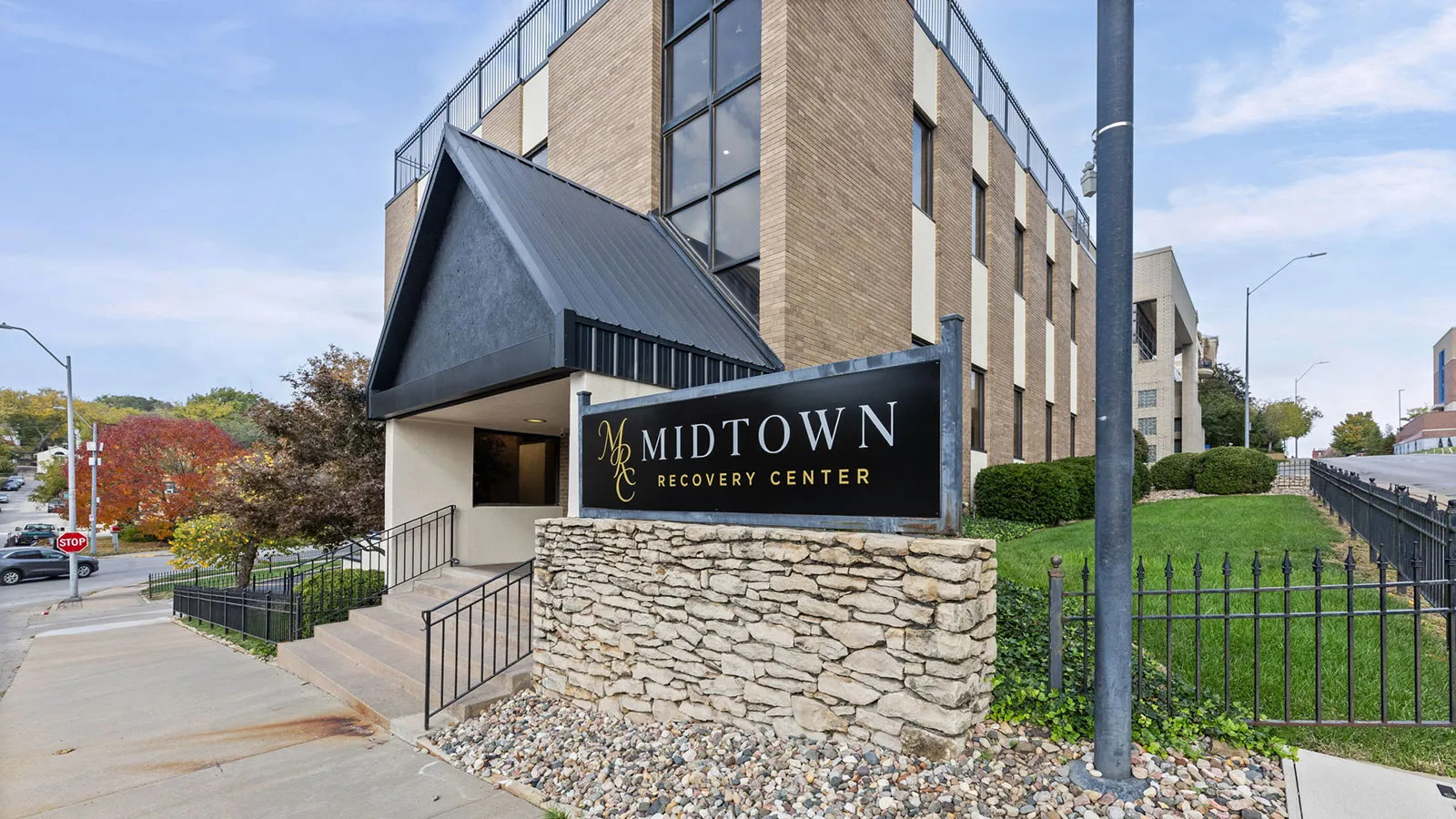
Treatment takes place in person at our two-story building at 1000 W 46th Street in Kansas City, MO. The facility has three group rooms, private offices, and a client lounge designed to feel comfortable and private.
Frequently Asked Questions About ERP
Is ERP the same as CBT?+−
ERP is a specialized form of CBT. While CBT can use several techniques to address thoughts, emotions, and behaviors, ERP specifically targets the cycle of obsessions, anxiety, compulsions, and avoidance associated with OCD.
Does ERP treat addiction?+−
ERP is primarily a treatment for OCD, not substance use disorder. When OCD and addiction occur together, ERP may be one component of a broader treatment plan that addresses both conditions.
Can ERP help with intrusive thoughts?+−
Yes. ERP can be used for OCD involving intrusive thoughts, including situations in which the compulsive response is primarily mental rather than an observable ritual. Treatment focuses on facing the thought or trigger while reducing mental rituals, reassurance seeking, or avoidance.
Does ERP make anxiety worse?+−
ERP can temporarily increase anxiety because treatment involves deliberately approaching situations that trigger distress. The purpose is to learn that anxiety and uncertainty can be tolerated without relying on compulsions. Over repeated practice, many people become better able to manage these feelings.
How long does ERP therapy take?+−
A typical ERP course may involve about 12 to 20 sessions, although treatment length varies. Some people require more intensive treatment depending on symptom severity and their response to therapy.
Can ERP be used with other mental health treatments?+−
ERP can be combined with other forms of treatment when clinically appropriate. OCD may also occur alongside depression, anxiety disorders, PTSD, ADHD, or substance use disorder, so a person's complete clinical picture should be considered when developing a treatment plan.
Our Team
Medical Director
MD
Clinical Director
LCSW
Admissions Coordinator
We Accept Most Major Insurance Plans
Don't let cost be a barrier to recovery. Most treatment is covered by insurance.
Start Your Recovery Today — Same Day Admissions Available
24/7 Admissions Support