
Location
Kansas City, KS
Addiction treatment in Kansas City
Addiction is a serious mental health condition you shouldn’t face alone. It alters how your brain works and makes you lose control over your drinking or drug use, making you vulnerable to other health issues.
According to the Substance Abuse and Mental Health Services Administration (SAMHSA), there are over 48 million people who struggle with substance use disorder (SUD) in the US, many of whom are adolescents.
Only a small percentage get professional help.

Taking that first step can feel overwhelming, especially when you’re unsure about the kind of support you need. Addiction treatment centers provide evidence-based therapies and levels of care suitable for your circumstances.
If you or someone you know is living with an alcohol or drug addiction in Kansas City, Kansas, Midtown offers personalized programs to help you get back on track.
Not everyone who drinks or uses drugs develops addiction.
Substance use disorder, as a medical condition, is driven by several factors, including someone’s genetics, environment, and mental health.
If you feel like your drinking or drug use is causing issues in your life, it may be time to consider finding treatment.
Loss of control over behavior is a primary characteristic of addiction. You may find yourself unable to stop even in situations where drinking or using drugs may endanger your life.
Over time, you may experience uncomfortable symptoms whenever you cut back or reduce alcohol or drug intake. This is called withdrawal, meaning your body has adapted to the substance’s presence.
You don’t have to wait until addiction turns for the worse before seeking help. Like many health conditions, addiction is treatable, and finding support early makes it easier to manage and overcome.
Midtown is a trusted provider of alcohol and opioid treatment in Kansas City, MO. We offer personalized outpatient services to support your recovery.
Levels of Care: What We Offer
The American Society of Addiction Medicine (ASAM) defines a continuum of care for people recovering from some kind of addiction.
There’s no one-size-fits-all when it comes to addiction. Substance use disorder varies wildly from mild to severe, and patients need to receive treatment matching their unique circumstances.
Medical detox is the usual first step in treatment. This involves managing withdrawal symptoms and ridding the system of the substance to reduce physical dependence.
Physicians monitor patients and provide sufficient clinical support to ensure a safe, comfortable withdrawal.
Midtown doesn’t provide medical detox, but our admissions team can refer you to a provider that does, and you can continue your care with us afterward.
Once they’re stabilized, a person may start with a more structured program and later move on to less intensive treatment options as their needs change.
Midtown offers partial hospitalization, intensive outpatient, and standard outpatient treatment programs. We also provide medication management and aftercare services for people stepping down from rehab.
Partial Hospitalization Programs (PHP)
A PHP may be suitable for those who have completed detox and don’t need the strict supervision of residential treatment. It provides a high level of structure, but patients live at home while attending therapy.
PHPs are intensive and resemble inpatient rehab, which requires patients to have a stable home environment.
Midtown’s day treatment lasts for four to six weeks, with treatment delivered Monday through Saturday from 9:00 AM to 2:45 PM.
Intensive Outpatient Programs (IOP)
An IOP is a substance use disorder treatment where patients attend treatment several times a week for a few hours at a time. Clinicians provide evidence-based therapies, counseling, and medication.
Because it’s less intensive than a PHP, IOP may be considered a step-down after completing day treatment.
There are two IOP arrangements on offer at Midtown:
- Day track: 9:00 AM to 12:00 PM
- Evening track: 5:30 PM to 8:30 PM
The typical length for both tracks is 30 to 90 days.
Working professionals and students who can’t afford to pause their lives may benefit from the flexibility of evening therapy.
Standard Outpatient
Standard outpatient programs are available for those who need ongoing support for addiction, but not as structured as a PHP or IOP.
Outpatient services like individual and group therapy can be a part of a longer substance abuse treatment plan and mental health support. An outpatient program’s length can vary from one patient to another.
Medication-Assisted Treatment (MAT)
It’s not uncommon for people diagnosed with SUD to also suffer from an underlying mental health disorder. Surveys found that roughly 50% of people living with addiction also have one severe mental illness.
This is called a dual diagnosis or a co-occurring disorder.
Some of the most common co-occurring mental health conditions alongside substance abuse are depression, anxiety, bipolar disorder, post-traumatic stress disorder (PTSD), and personality disorders.
Treating both the addiction and the mental illness simultaneously is important because one can feed and worsen the other.
As part of Midtown’s MAT services and dual diagnosis treatment, we offer prescriptions like Suboxone, Sublocade, and Vivitrol. These are FDA-approved medications for managing withdrawal and cravings.
Suboxone and Sublocade may be used for moderate to severe opioid addiction, such as cases involving heroin and fentanyl. Vivitrol is a drug that alleviates alcohol dependence and prevents opioid relapse.
Aftercare Services
The ASAM continuum of care highlights continuing support after rehab. This is an important relapse prevention strategy, as relapse risk is higher during this time.
Common examples of aftercare services include:
- Follow-up therapy
- Support groups
- Counseling
- 12-step groups
Similarly, Midtown lets former clients stay connected to recovery. You may join available alumni and family groups, and connect with local sober living homes.
What Happens When You Call?
Making that first call can be the hardest decision. Knowing what you can expect may make it easier.
The admissions process usually begins after you verify insurance coverage. This step is essential before you start treatment so you can understand your plan benefits and prepare for out-of-pocket costs.
You can usually ask a facility’s admissions team to help with verification.
A case manager will conduct a thorough assessment. They’ll ask about your substance abuse, mental health, treatment history, special medical needs, and living conditions.
Treatment may begin once an appropriate program is established, and you’ve completed the admissions requirements.
At Midtown, same-day admissions may be available once your insurance is verified and your assessment is complete.
The call
Starting addiction treatment begins with one call. Admissions is available 24/7, so you can call at any hour, for yourself or for someone you love in Kansas City, Kansas.
You don’t need to have it all figured out. A member of our team listens first, then asks about your situation, the substances involved, any mental health concerns, and your insurance. Everything you say is confidential and protected by federal privacy law for substance use treatment. Those answers help us point you toward the right level of care.
Most first calls are short. If you want to talk longer, you can, and if you just want to ask a question and think it over, that’s fine too.
Verification and same-day admission
Next, we verify your insurance. We work with all major commercial insurance companies. Benefits vary by plan, so we check what yours covers for each level of care and tell you where you stand before you commit to anything. You can also use the Verify Insurance button on this page.
Midtown does not accept Medicaid or Medicare. Payment plans are available, and we provide private-pay rates on request.
Same-day admission may be available once we verify your insurance and complete your assessment, so the sooner you call, the sooner both can start. When your first day is set, your admissions coordinator tells you exactly what to bring and where to go.
Intake: day one
Your first day starts with an assessment. Our team uses it to understand your substance use, your health history, and any mental health conditions, then matches you to the right level of care, such as PHP or IOP. If you’re living with depression, anxiety, or another condition alongside substance use, say so; it shapes your plan.
Midtown is an outpatient program, so you don’t stay overnight. You come to our building at 1000 W 46th Street in Kansas City, Missouri, attend your sessions, and go home to Kansas City, Kansas at the end of the day. Your first day also covers the practical side: your schedule, what to expect in group, and who to contact with questions.
A Comfortable Place to Focus On Recovery
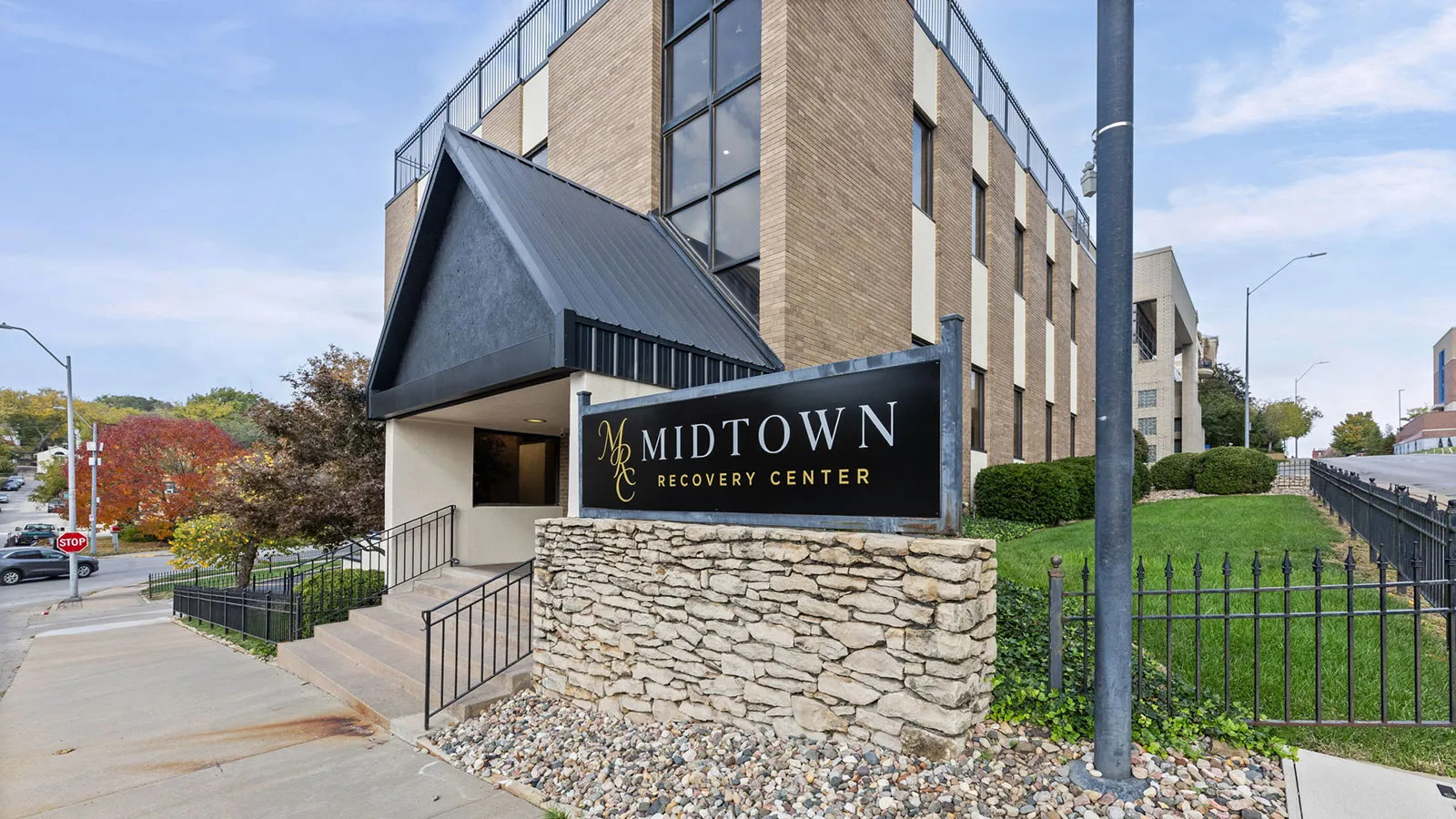
Midtown is located at 1000 W 46th Street, Kansas City, Missouri, about a 10-minute ride from Kansas City, Kansas.
The building has three group rooms, private offices, and a client lounge. For someone starting addiction treatment, an environment where they feel comfortable and relaxed is conducive to recovery.
Daily life and amenities
Because every program at Midtown is outpatient, daily life stays yours. You come in for your scheduled block, whether that’s a full PHP day, a three-hour IOP session, or an outpatient appointment, and the rest of the day is for work, family, and practicing what you learned.
While you’re here, the day moves between group rooms and private offices. The client lounge is yours between sessions for a coffee, a quiet moment, or a conversation with someone who understands. You don’t need to bring much; your admissions coordinator goes over the short list before your first day.
Privacy and discretion
Privacy matters when you’re seeking substance use treatment, and the law is on your side. Federal confidentiality rules for addiction treatment (42 CFR Part 2) and HIPAA protect your records and go further than ordinary medical privacy.
In practice, that means staff will not confirm to a caller that you are a client, or share anything about your care, unless you have signed a release naming that person. You decide who is in the loop, and you can change that at any time. Your employer only learns what you choose to tell them.
Getting here

Midtown is in Midtown Kansas City near Westport and the Country Club Plaza, roughly 10 to 20 minutes from Kansas City, Kansas depending on traffic. Use the map on this page to see exactly where we are, and if you’d like help finding us, call admissions any time.
Directions and map
From Kansas City, Kansas, most people cross the state line on I-70 or I-35 and head south toward Westport, or come down Southwest Trafficway from the Downtown Loop. The building is a two-story standalone at 1000 W 46th Street in Kansas City, Missouri, a few blocks west of Main Street. Enter the address into your maps app for turn-by-turn directions, and ask admissions about arrival details when you schedule your first day.
Coming from out of area
Many of our clients come from across the Kansas City metro, including Kansas City, Kansas, and some come from further away. Because Midtown is outpatient, you need somewhere to stay during treatment. If you don’t have a safe, substance-free place nearby, tell admissions. We have relationships with local sober living homes and can help you think through options before you start.
If you’re coming from out of state, your commercial insurance usually travels with you, though plan rules vary. We verify that with your insurer before you commit.
Evidence-Based Therapies at Midtown

Behavioral therapies are key to a structured SUD treatment program. These therapeutic interventions can help resolve underlying issues and thought processes that reinforce substance abuse.
Midtown clinicians are trained in CBT, DBT, and EMDR therapy for addiction.
- Cognitive Behavioral Therapy: CBT is a type of talk therapy. It helps recovering patients identify toxic thinking and behaviors and challenges them. They also learn coping strategies they can use in everyday life.
- Dialectical Behavior Therapy (DBT): DBT therapy is a variant of CBT that focuses on teaching mindfulness, distress tolerance, and emotion regulation. Patients practice to handle intense emotions without relying on alcohol or drugs.
- Eye Movement Desensitization and Reprocessing (EMDR): Primarily used for treating PTSD, EMDR may help resolve distress and trauma-related substance use disorder.
Helping a Loved One Struggling With Addiction
Watching someone you care about struggle with an alcohol or substance use disorder can make you feel powerless, but there are steps you can take to help.
A planned intervention with a professional interventionist is a great way to encourage the person to seek support.
Facilitating honest, open conversations about how their drinking or drug use is impacting the people around them may make them recognize a need for a change.
Avoiding enabling behaviors and establishing boundaries protect you and your loved ones from addiction’s harm.
Getting a loved one here
Talking about substance use and treatment is hard, and when someone you love is struggling, you may feel helpless. These tips can show you where to start:
- Pick a calm, private moment when your loved one is sober.
- Lead with concern and share specific examples of what you’ve seen, without labels or blame.
- Offer to help with the call to admissions, and to drive them to their first day.
You can call together or call first on your own. We can walk you through the steps, including insurance verification, and if they refuse right now, keep the door open. Many people say yes on the second or third conversation.
Visiting, calls, and contact
Because Midtown is outpatient, there are no visiting hours to plan around. Your loved one comes home every day, and family involvement happens through family sessions rather than visits.
If you’d like updates on how treatment is going, your loved one can sign a release naming you. Without it, staff can’t confirm anything, including whether someone is a client. Phone use during program hours is covered at intake, and admissions can answer questions about contact any time.
Family programming
Family sessions are part of the program and can be held up to once a week. They’re led by your loved one’s clinical team and give the family a structured place to talk openly, understand how addiction and recovery work, and rebuild trust. Some time is spent together and some with family members on their own, so you can ask your questions freely.
After treatment, Midtown’s family group, part of our aftercare, offers continued support from other families who understand. Want to know how your family can take part? Call admissions, and we’ll explain how it works.
Aftercare and alumni in Kansas City

Finishing a treatment program is a big milestone. Recovery continues after it ends, and so does our support. Aftercare at Midtown includes:
- Alumni group: connects you with people who have completed treatment, so you can share what’s working and what’s hard.
- Family group: gives your loved ones a place to keep learning and supporting you after treatment.
- Sober living connections: we have relationships with local sober living homes if you need a stable place to live after treatment.
Before you finish, your care team builds a relapse prevention plan with you. Ask our admissions team about aftercare when you call, and we’ll explain how to stay connected.
Kansas Addiction Statistics
Surveys reveal that Kansas has a higher-than-average rate of alcohol-related deaths among other states. NCDAS reports that nearly 1,800 deaths are attributed to excess drinking every year.
Substance use rates are also significant in the Sunflower State, with 8.2% of the adult population struggling with or having suffered from an SUD.
If you’re living in Kansas, know that addiction is a treatable condition, and that help is available.
FAQs
Can family visit during a rehab?+−
Midtown is an outpatient program, so there are no visiting hours; your loved one comes home each day. Family involvement happens through family sessions, which are part of the program and can be held up to once a week.
What insurance does addiction rehab centers accept?+−
Midtown works with all major commercial insurance companies, including Aetna, Blue KC, Anthem Blue Cross Blue Shield, Cigna, UnitedHealthcare, and UMR. We do not accept Medicaid or Medicare. Our admissions team verifies your benefits before admission.
Do I need detox before starting treatment?+−
Not everyone needs the same withdrawal support. But severe cases of opioid and alcohol addiction often require medical detox for safe withdrawal.
Does Midtown offer dual diagnosis treatment?+−
Yes, Midtown recognizes that addiction rarely develops alone and offers a combination of medication and therapies to address SUD and other co-occurring disorders.
How long does addiction treatment take?+−
The length of rehab heavily depends on the severity of addiction and the type of program. Outpatient treatment may last anywhere from 30 to 90 days or more, depending on individual needs.
What should I do to get help with my addiction?+−
If you’re ready to get help to overcome an addiction, you can start by contacting a treatment center and discussing your circumstances and treatment options.
We Accept Most Major Insurance Plans
Don't let cost be a barrier to recovery. Most treatment is covered by insurance.
Our Team
Medical Director
MD
Clinical Director
LCSW
Admissions Coordinator
Accredited & Licensed
Visit Us in Kansas City
Serving Kansas City, KS from our Kansas City facility.
1000 West 46th Street
Kansas City, MO 64112